

CampingSolar
EcoFlow DELTA Pro (Standalone) Review: 3.6kWh Without the Panel


Disclosure: As an Amazon Associate, CampingSolar earns from qualifying purchases. If you buy through links on this page, we may earn a small commission at no extra cost to you. Learn more.




By a camper who already owned solar panels before buying a power station — and didn’t want to pay for a second set.
The Hook: Do You Actually Need the Panel That Comes With It?
Here’s a question nobody asks before buying a power station bundle: what if you already own solar panels? Or what if you’d rather choose your own based on wattage, weight, or brand compatibility instead of taking whatever’s bundled in the box? The EF ECOFLOW Delta Pro, sold here as a standalone 3600Wh unit without an included panel, is built exactly for that buyer — the one who wants the same proven 3.6kWh LiFePO4 powerhouse without paying for solar hardware they may not need.
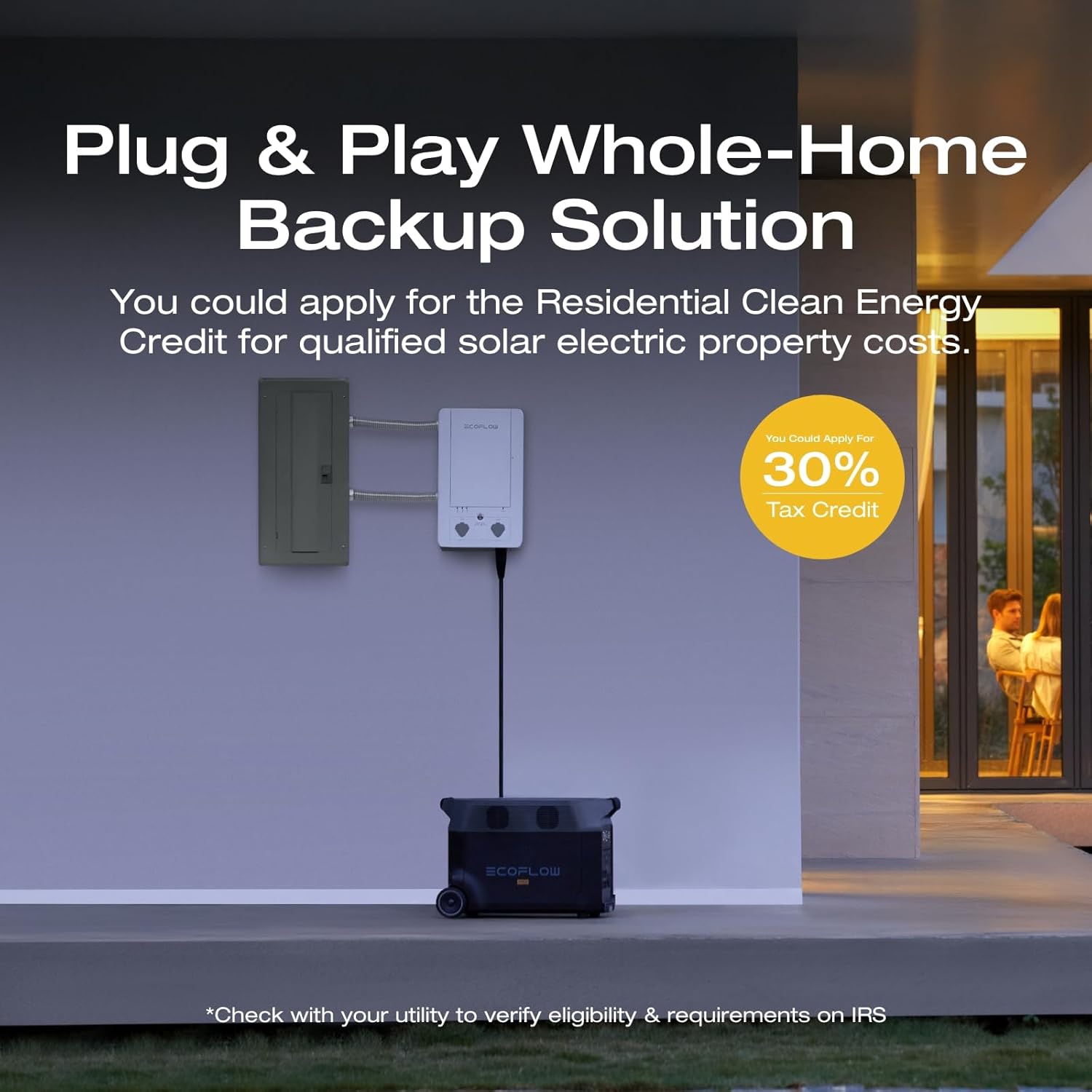
This is the same rock-solid Delta Pro platform trusted by campers, RVers, and home backup preppers everywhere: 3600W continuous output, a 2.7-hour fast charge, and 5 AC outlets ready to run serious appliances. The only difference is what’s in the box — and for a lot of buyers, that difference translates directly into savings or flexibility, not a compromise.
We broke down the full specs, looked at how this standalone configuration stacks up, and — since panel choice is now entirely up to you — walked through exactly which solar panels pair best with it. Here’s everything you need before you check current pricing on Amazon.
Key Features & Benefits
- 3,600Wh LiFePO4 capacity: The same proven battery platform used across EcoFlow’s Delta Pro bundles, expandable up to 25,000Wh with additional Smart Extra Batteries.
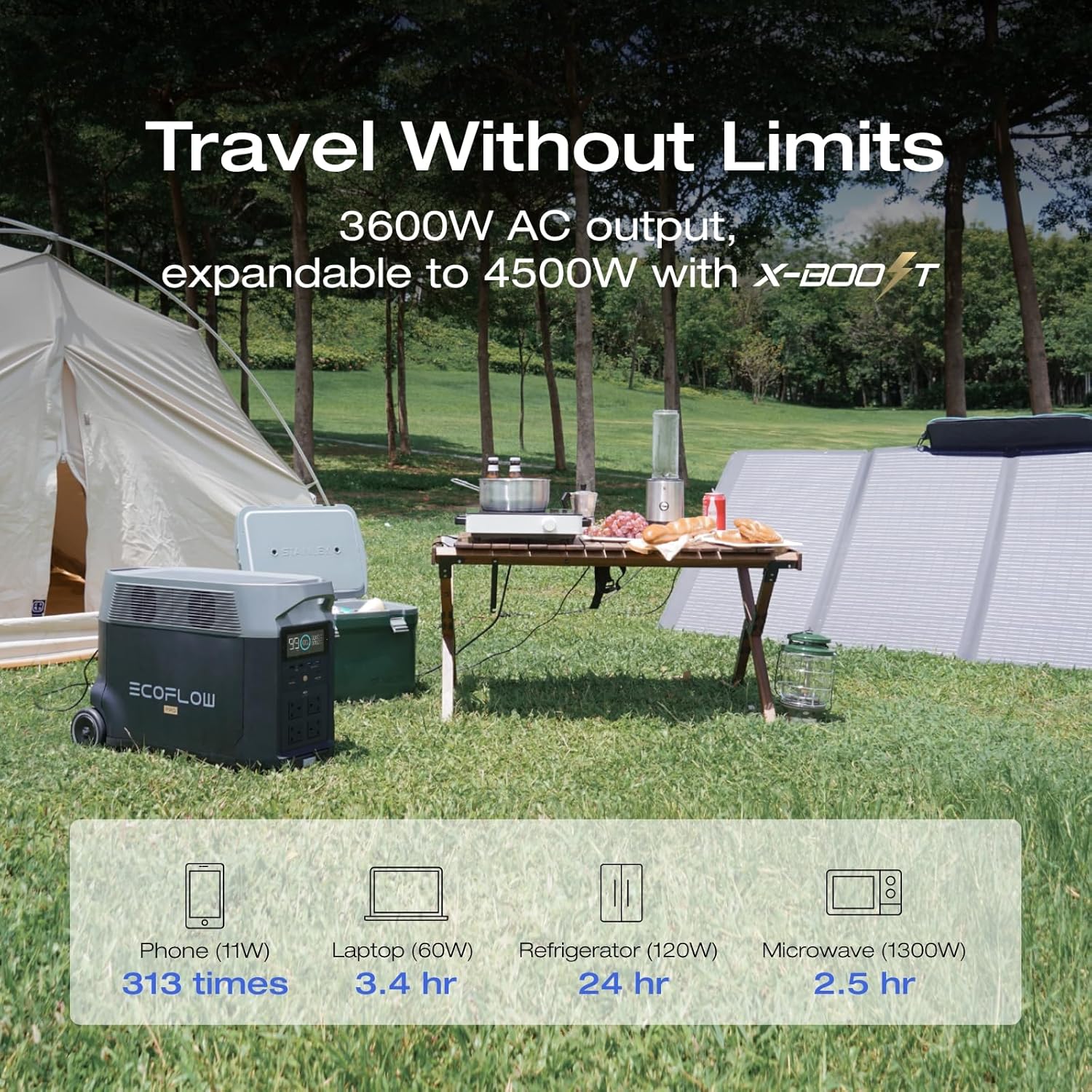
- 3,600W continuous AC output: Covers roughly 99% of common household and RV appliances, from refrigerators to power tools to space heaters.
- 2.7-hour fast charge: Full recharge via a standard 1800W wall outlet in about 2.7 hours — no solar panel required if you just need a fast grid-charging backup unit.
- 5 AC outlets plus USB, DC, car, and Anderson ports: The full 15-port lineup remains identical to the bundled version — you’re only skipping the panel, not any of the unit’s core capability.
- Freedom to choose your own solar setup: Buy exactly the wattage, brand, and portability profile that fits your specific camping or RV setup, rather than being locked into a bundled panel spec.
- Often a lower upfront cost than the panel-inclusive bundle, which matters if you’re building out a system gradually or already have compatible panels on hand.
For the full breakdown of this exact platform’s core specs and long-term durability, we’ve already covered the bundled version in detail in our EcoFlow Delta Pro 3 review here on Camping Solar — worth a look if you’re weighing the older versus newer generation.
Specifications Table
| Specification | EF ECOFLOW Delta Pro (Standalone) Details |
|---|---|
| Battery Capacity | 3,600Wh (expandable up to 25,000Wh) |
| Battery Chemistry | LiFePO4 (LFP) |
| Continuous AC Output | 3,600W |
| X-Boost Output | Up to 4,500W |
| AC Outlets | 5 (120V) |
| Total Ports | 15 (5 AC, 4 USB-A, 2 USB-C, 2 DC, 1 car, 1 Anderson) |
| AC Fast Charge Time | ~2.7 hours (1800W wall outlet) |
| Solar Panel Included | No — buyer’s choice |
| Max Solar Input | Compatible with EcoFlow 400W-class panels and most MC4-compatible panels via adapter |
| Unit Weight | ~99 lbs (45 kg) |
| App Control | Yes, WiFi and Bluetooth via EcoFlow app |
| Expected Battery Lifespan | Up to ~10 years with proper care |
| Best Use Case | Buyers with existing solar panels, or those wanting to choose their own panel setup |
Runtime calculator: how long will it power your gear?
Pick the devices you plan to run at the same time. Wattages are typical figures – check the label or charger of your own device and edit them for a closer estimate.
Some energy is lost in the inverter, so a power station rarely delivers its full rated capacity. 85% is a common planning figure – lower it for AC devices, raise it for USB/12V-only use.
| Use | Device | Watts | Qty |
|---|---|---|---|
| Phone charging | |||
| LED camp light | |||
| Laptop | |||
| CPAP (no humidifier) | |||
| 12V fridge / cooler (average) | |||
| Fan | |||
| 32" TV | |||
| Satellite internet dish | |||
| Electric blanket | |||
| Coffee maker | |||
Estimate only: real runtime changes with temperature, battery age and how often a fridge or heater cycles on. Make sure the station's continuous output rating covers the total watts.
Comparative Table: Standalone Delta Pro vs. Bundled Options
| Configuration | Capacity | Panel Included? | Best For |
|---|---|---|---|
| Delta Pro (Standalone) | 3,600Wh | No | Buyers with existing panels or a specific panel preference |
| Delta Pro with 400W Panel Bundle | 3,600Wh | Yes (400W, 23% efficiency) | First-time buyers wanting a complete plug-and-play system |
| EcoFlow Delta Pro 3 | 4,096Wh (expandable to 48kWh) | Varies by listing | Buyers wanting the newest generation with 240V/UPS capability |
The math here is simple: if you already own a compatible solar panel — or you’d rather pick your own based on weight, foldability, or a specific wattage class — the standalone Delta Pro gets you the exact same battery and inverter performance without paying for hardware you don’t need. If you’re starting completely from scratch with no panels at all, the bundled version (or building your own kit, covered below) is worth comparing on total cost.
How It Compares to Gear on GoOutdoor.us
If you’re assembling a full off-grid power setup piece by piece, our sister site’s camping power station guides on GoOutdoor.us are a useful companion resource while you plan out the rest of your kit.
Which Solar Panel Should You Pair With It?
Since you’re building your own solar side of the equation, here’s how to think about it:
| Panel | Power | Best Match Reason |
|---|---|---|
| Renogy REGO 400W | 400W | Lightest option (~16 lbs) if portability and easy setup matter most for your camping trips. |
| ZOUPW 480W Bifacial | 480W | Higher voltage class and bifacial gain — a strong match if you want to maximize solar input toward the Delta Pro’s charging ceiling. |
| Greenmagic 400W | 400W | Budget-friendly option if you’re stretching your total system cost after buying the standalone unit. |
Running two or three panels in parallel (mixing brands is generally fine as long as voltage and connector types are compatible or adapted correctly) is the fastest way to bring solar recharge time down from the roughly 11-hour single-panel mark toward the 3.5-hour range achievable with a full three-panel array.
Tips for Getting the Most Out of Your Standalone Delta Pro
- Confirm your existing solar panel’s connector and voltage compatibility before your first camping trip, not after — a quick check now saves a frustrating first setup.
- Use the EcoFlow app to monitor real solar input once connected, so you know exactly what wattage your specific panel setup is actually delivering.
- Budget for an adapter cable if pairing with a non-EcoFlow panel. Most major brands are compatible with the right connector, but it’s a small extra cost worth planning for.
- Start with grid AC charging if you don’t have panels yet. The 2.7-hour fast charge means you can rely on wall power initially and add solar later without missing out on core functionality.
- Consider parallel panel setups if you camp off-grid frequently. Two or three panels dramatically cut recharge time compared to a single panel.
How to Maintain It So It Lasts for Years
- Keep firmware updated through the EcoFlow app for both performance improvements and occasional new feature rollouts.
- Avoid long-term storage at 0% charge. LFP batteries handle partial-charge storage significantly better than sitting fully depleted.
- Keep the cooling vents and fans free of dust and debris, particularly important under heavy AC loads.
- Store indoors or under solid cover — the main unit is not waterproof, regardless of what solar panel you pair it with.
- Whatever solar panel you choose, maintain it according to its own care guidelines — cleaning cells regularly and storing dry are universal best practices across brands.
Top 3 Products That Pair Perfectly With the Standalone Delta Pro
| Product | Why It Pairs Well |
|---|---|
| A 400W-class foldable solar panel of your choice | This is the entire point of buying the standalone unit — pick the panel that matches your weight, budget, and portability needs exactly. |
| An EcoFlow-compatible MC4 adapter cable | Ensures a clean, safe connection if you’re pairing with a non-EcoFlow-branded solar panel. |
| An EcoFlow Smart Extra Battery | The same expansion path as the bundled version — scale capacity up toward 25kWh as your needs grow. |
Best Conditions for Maximum Performance
- A confirmed-compatible solar panel setup before your first off-grid trip — this is the condition that matters most for this standalone configuration specifically.
- A dedicated 1800W+ wall outlet for the fastest AC charging when solar isn’t available.
- Multiple panels in parallel for meaningfully faster solar recharge during extended off-grid use.
- Indoor or covered storage, since the main unit isn’t waterproof.
- Realistic load planning against the 3600W/4500W output ceiling, the same as any Delta Pro configuration.
Why Buy From Amazon?
Buying through Amazon means fast, trackable shipping, a clear return policy, and access to a large pool of verified buyer reviews — helpful for confirming real-world reliability before committing to a purchase at this price point, especially when you’re also independently sourcing your solar panel setup.
👉 Check Current Price on Amazon
Frequently Asked Questions
Is the standalone Delta Pro missing any features compared to the bundled version?
No — it’s the identical 3,600Wh battery, 3,600W inverter, and full 15-port lineup. The only difference is that no solar panel is included in the box, giving you full freedom to choose your own.
Can I use my existing solar panels with this unit?
In most cases, yes — as long as the connector type and voltage are compatible, or you use the correct adapter cable. Check your specific panel’s specs against the Delta Pro’s solar input requirements before your first setup.
Is it cheaper to buy the standalone unit and a separate panel, or the bundle?
This depends on current pricing for both configurations and which panel you choose. If you already own compatible panels, the standalone unit is almost always the more cost-effective route since you’re not paying for hardware you don’t need.
How fast does it charge without solar, using just AC power?
A full charge takes approximately 2.7 hours via a standard 1800W wall outlet, making it a genuinely fast option even without any solar input at all.
Can it still power a full-size refrigerator during an outage?
Yes — this is the same battery and inverter platform as the bundled version, with owners reporting 24+ hours of full-size refrigerator runtime during real storm outages.
Does skipping the panel affect the unit’s expandability?
No — the standalone Delta Pro has the exact same expansion path toward 25,000Wh using EcoFlow’s Smart Extra Battery accessories as the panel-inclusive bundle.
Final Verdict: Should You Buy the Standalone Delta Pro?
If you already own solar panels, have a specific brand or wattage preference, or simply want to avoid paying for hardware you won’t use, the standalone EF ECOFLOW Delta Pro is the smarter buy — you get the exact same proven 3,600Wh battery, 3,600W output, and full port lineup as the bundled version, just without the built-in panel decision made for you.
The only real homework on your end is confirming solar panel compatibility before your first setup. Beyond that, this is the same trusted platform that’s kept refrigerators running through multi-day outages and powered RVs and off-grid cabins across thousands of verified buyer reviews — just with the flexibility to build your solar side exactly the way you want it.
👉 Get the EF ECOFLOW Delta Pro on Amazon
Disclosure: This post contains affiliate links. We may earn a commission on qualifying purchases at no extra cost to you.