Disclosure: As an Amazon Associate, CampingSolar earns from qualifying purchases. If you buy through links on this page, we may earn a small commission at no extra cost to you. Learn more.
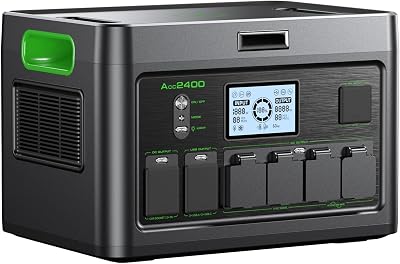
There’s a reason the 1000W power station category is one of the most popular in the entire solar generator world: it’s the sweet spot. Big enough to actually run real appliances — coffee makers, mini-fridges, power tools, CPAP machines — but still small enough that you’re not renting a trailer just to move it around. This 1000W Portable Power Station with an 1110Wh battery sits squarely in that category, and it comes with a genuinely useful feature list: pure sine wave output, both 110V and 220V AC compatibility, and a design built specifically for RV travel and camping.
We’ve reviewed plenty of units in the 1000Wh-1100Wh class here at CampingSolar.us, including the DJI Power 1000 V2 and the AFERIY 1024Wh unit, so we know exactly what separates a genuinely solid mid-size power station from a disappointing one. Let’s see where this one lands.
⭐ Main Features and Benefits
1110Wh Battery Capacity: Enough to run a mini-fridge for a day, charge multiple devices repeatedly, or keep essential electronics running through a multi-hour outage.
1000W AC Output: Powerful enough to handle coffee makers, power tools, small kitchen appliances, and laptops — well beyond simple phone-charging duty.
Pure Sine Wave Power Supply: Clean, stable power output that’s safe for sensitive electronics like laptops, CPAP machines, and medical equipment — unlike modified sine wave units that can cause issues with certain devices.
Dual Voltage Support (110V/220V): A genuinely useful feature for travelers and international users, offering flexibility that many competing units in this price range don’t include.
RV and Camping-Focused Design: Built with the road trip and campsite user in mind, prioritizing portability and multi-device charging over home-only use cases.
Solar-Ready Charging: Compatible with solar panel input for off-grid recharging on multi-day trips away from wall outlets.
📋 Specifications Table
Specification
Details
Battery Capacity
1,110Wh
Rated AC Output
1,000W
AC Voltage Support
110V / 220V
Output Wave Type
Pure sine wave
Recharging Options
Wall outlet, car charger, compatible solar panel
Ideal Use Case
RV travel, camping, home blackout backup, road trips
Best For
Travelers needing dual-voltage flexibility and real appliance power
Runtime calculator: how long will it power your gear?
Pick the devices you plan to run at the same time. Wattages are typical figures – check the label or charger of your own device and edit them for a closer estimate.
Some energy is lost in the inverter, so a power station rarely delivers its full rated capacity. 85% is a common planning figure – lower it for AC devices, raise it for USB/12V-only use.
Use
Device
Watts
Qty
Phone charging
LED camp light
Laptop
CPAP (no humidifier)
12V fridge / cooler (average)
Fan
32" TV
Satellite internet dish
Electric blanket
Coffee maker
Estimate only: real runtime changes with temperature, battery age and how often a fridge or heater cycles on. Make sure the station's continuous output rating covers the total watts.
⚖️ How Does It Compare? 1000Wh-Class Power Station Showdown
The 1000Wh-1100Wh category is crowded, so here’s how this unit stacks up against a few well-known names — including one reviewed by our friends over at GoOutdoor.us.
Model
Capacity
Output
Battery Type
Best For
This 1000W Power Station
1,110Wh
1,000W
Lithium
Dual-voltage flexibility, pure sine wave output, budget-friendly
The takeaway: this unit competes well on price and dual-voltage flexibility, but if raw output ceiling or LiFePO4 longevity is your top priority, the DJI Power 1000 V2 or AFERIY 1024Wh pull ahead. For travelers who specifically need 220V compatibility or want the most budget-friendly entry point into the 1000Wh class, this station remains a solid, practical pick.
💡 Tips for Getting the Most Out of Your Power Station
Know your wattage before you plug in: Check the wattage rating of your appliances first — a 1000W ceiling fills up faster than you’d expect once you start stacking devices.
Use the pure sine wave advantage: Feel confident running laptops, CPAP machines, and other sensitive electronics without worrying about power quality issues.
Take advantage of dual voltage when traveling: If you’re using this internationally or with 220V appliances, this feature alone can save you from needing a separate voltage converter.
Charge fully before departure: Start every trip at 100% rather than relying on solar to top you up from a low starting point.
🧼 How to Maintain Your Power Station for Maximum Lifespan
Avoid full 0% drains: Lithium batteries last longer when you recharge before hitting critically low levels rather than repeatedly running to empty.
Store at partial charge: If it will sit unused for weeks or months, store it around 40-60% rather than fully charged or fully drained.
Keep it away from extreme heat: Don’t leave it baking in a hot car trunk during summer — heat is the number one enemy of lithium battery longevity.
Recharge periodically during storage: Give it a top-up charge every couple of months if it’s sitting as emergency backup.
Keep ventilation clear: Don’t cover the unit with gear while it’s charging or under load — airflow matters for consistent performance.
Best Operating Conditions
Moderate Temperatures: Like most lithium battery packs, this unit performs best in moderate conditions — avoid charging in freezing temperatures or direct, blazing sun.
Solar Charging Angle: If using a solar panel, keep it angled directly toward the sun and free of shade for the fastest possible recharge.
Indoor Emergency Use: Since it produces no fumes, it’s safe to use indoors during a power outage — unlike a gas generator.
Avoid Overloading: Stick to devices well within the 1000W rating to avoid triggering the built-in overload protection.
Top 3 Accessories That Pair Perfectly With This Power Station
A Compatible Foldable Solar Panel: To unlock true off-grid recharging, a 100-200W foldable panel is the natural companion for multi-day RV or camping trips.
A 12V Cooler or Mini-Fridge: Within the 1000W output range, a compact 12V cooler is a practical, power-friendly pairing for road trips and campsites.
Heavy-Duty Extension Cords: For running power to appliances further from your campsite or RV, a high-gauge outdoor-rated extension cord prevents voltage drop and keeps things running safely.
🛒 Why Buy This Power Station on Amazon?
Buying through Amazon means Prime shipping speed, a straightforward return process if the unit isn’t the right fit, and the buyer protection that comes standard with the world’s largest marketplace — valuable peace of mind for a power station purchase.
What can a 1000W, 1110Wh power station actually run?
This capacity comfortably handles laptops, mini-fridges, CPAP machines, coffee makers, and small power tools, though it isn’t designed for large appliances that draw well over 1000W continuously.
Is pure sine wave output actually important?
Yes — pure sine wave power is cleaner and safer for sensitive electronics like laptops and medical devices compared to modified sine wave alternatives, which can cause issues or reduced efficiency with certain equipment.
Does the dual voltage (110V/220V) feature matter for most buyers?
It’s especially valuable for international travelers or anyone using appliances rated for 220V, offering flexibility that many single-voltage competitors don’t provide.
How long does it take to fully recharge this power station?
Recharge time depends on the method used — wall outlet charging is fastest, while solar charging speed depends on panel wattage and available sunlight.
Is this power station suitable for home blackout backup?
Yes, it’s a solid option for keeping essential electronics, lighting, and small appliances running during a short-to-medium outage, though it isn’t intended to power an entire home.
🏆 Conclusion: Should You Buy This 1000W Power Station?
If you want a genuinely capable mid-size power station that handles real appliances — not just phone charging — this 1000W, 1110Wh unit delivers on the essentials: clean pure sine wave power, dual-voltage flexibility, and enough capacity for a solid day or two of RV or camping use. It may not have the fastest charge times or the highest surge capacity in its class, but for travelers and campers who want dependable, practical power without overspending, it’s a genuinely solid pick.