

CampingSolar
Portable Power Station 2400W (1843.2Wh) Review: Big Power, Bigger Value


Disclosure: As an Amazon Associate, CampingSolar earns from qualifying purchases. If you buy through links on this page, we may earn a small commission at no extra cost to you. Learn more.

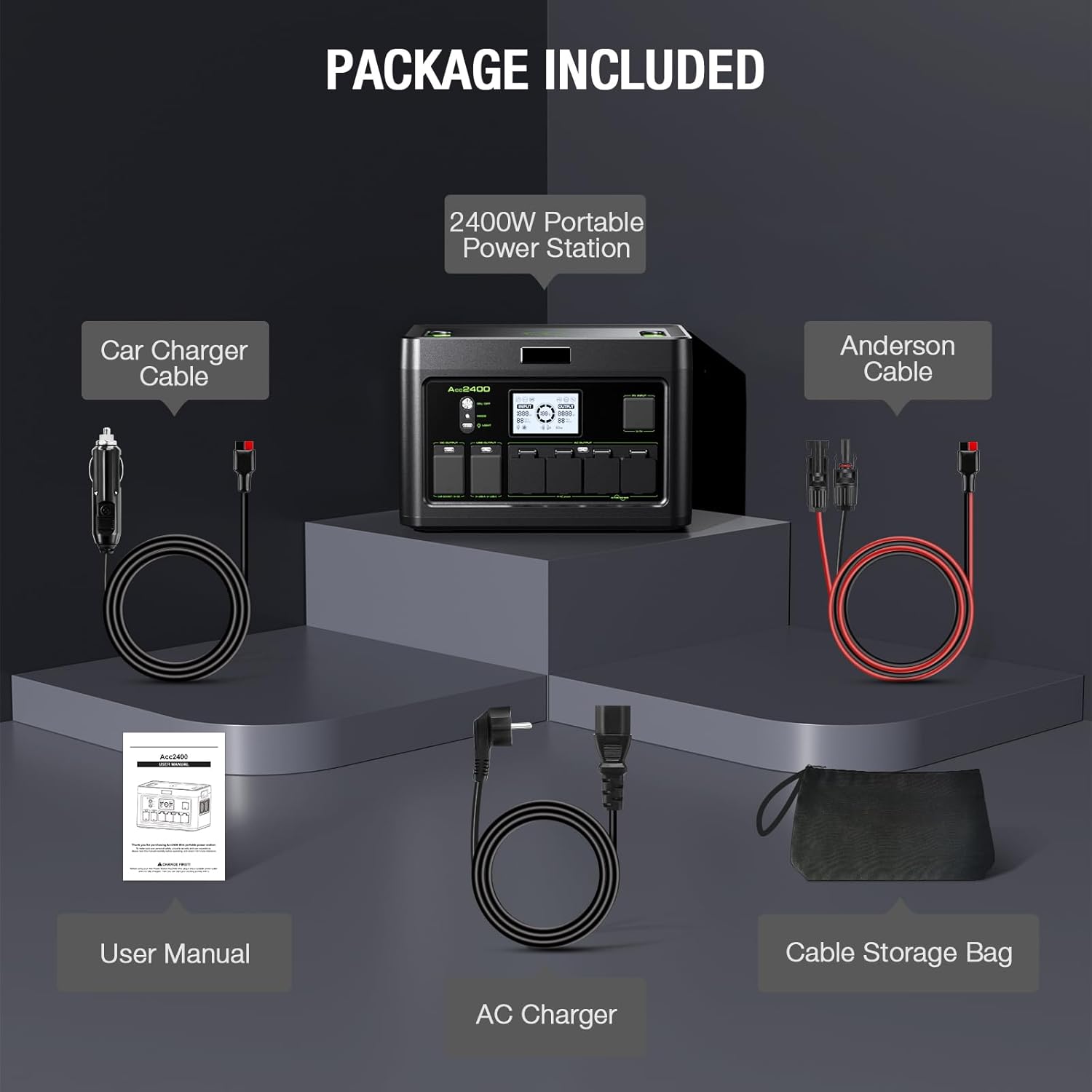
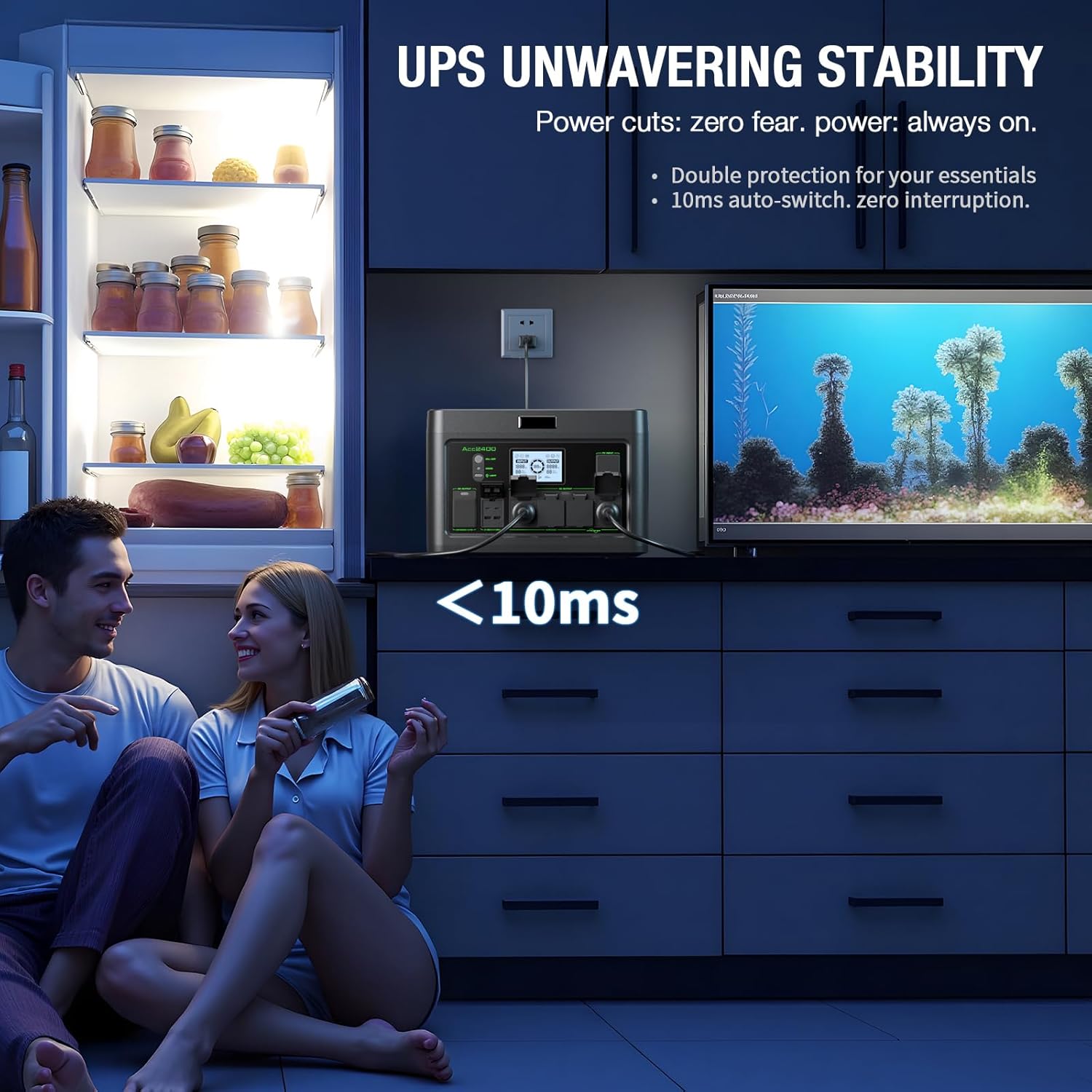
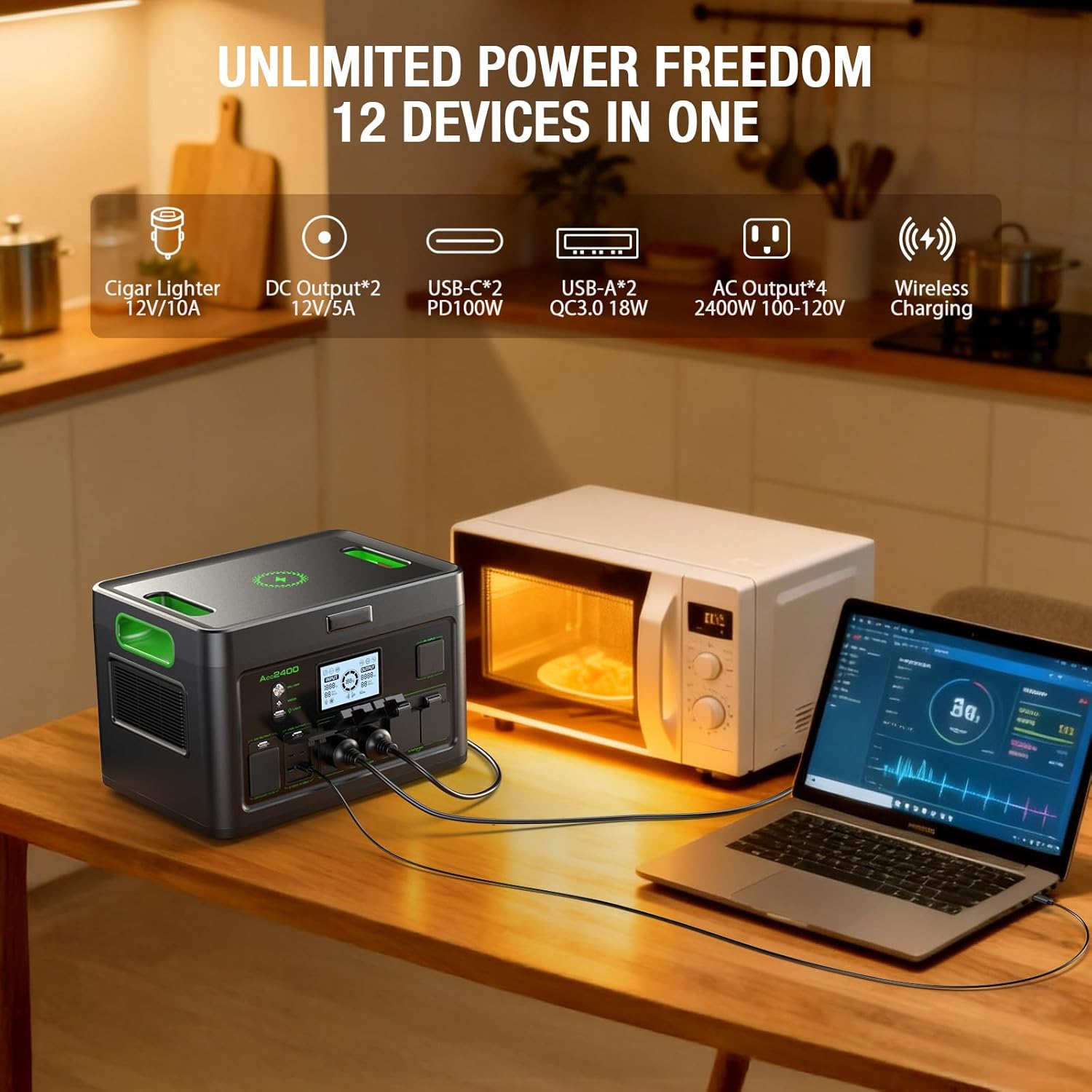

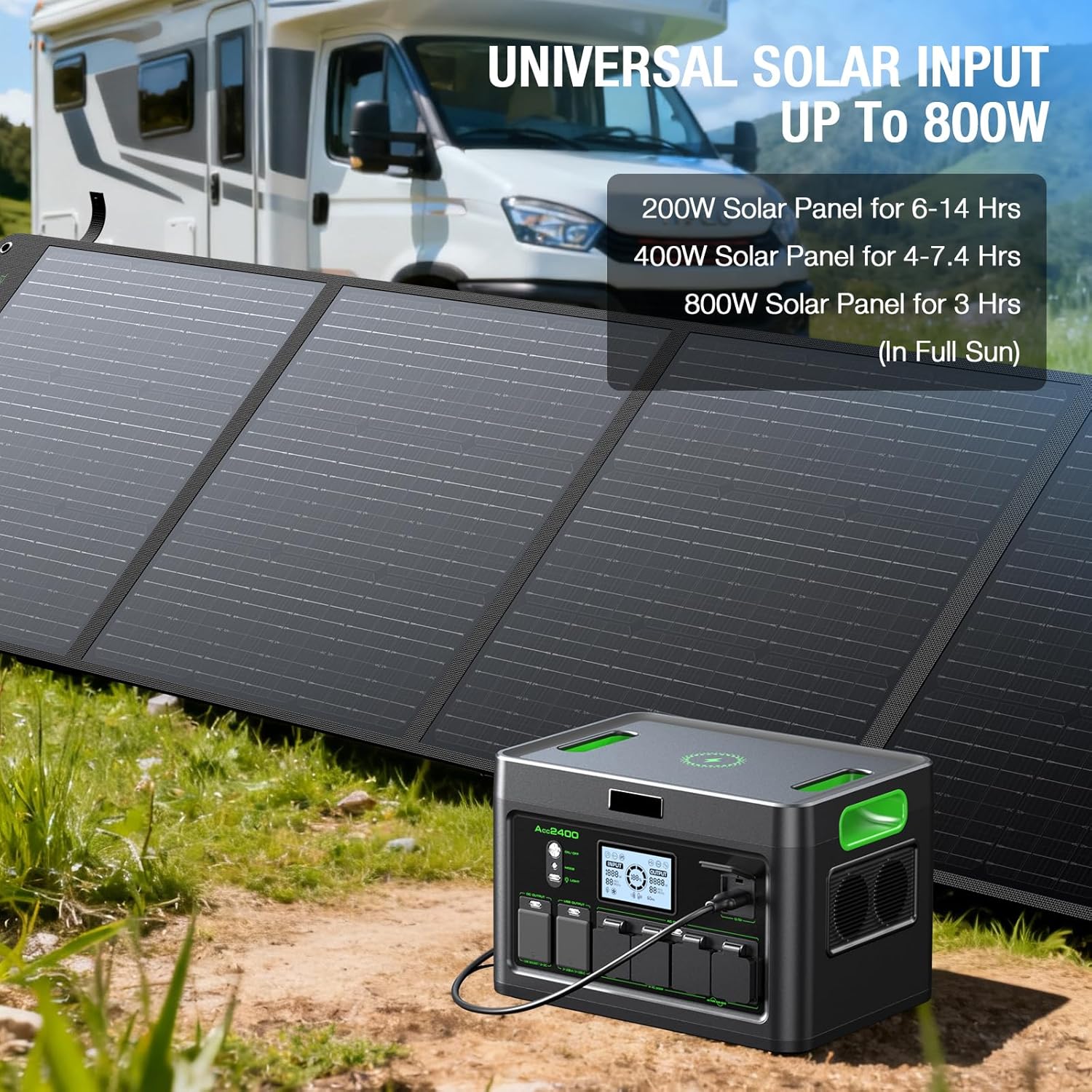

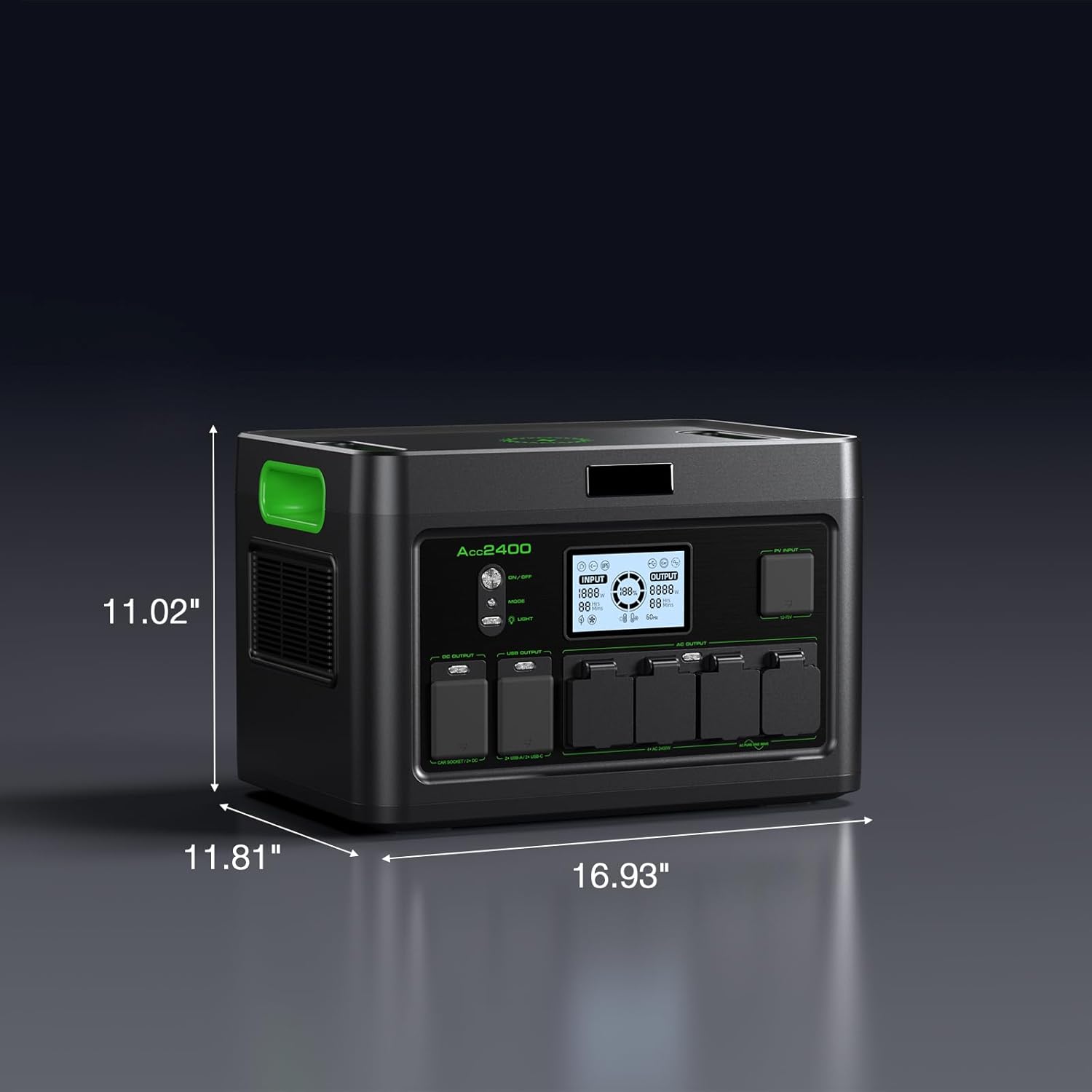
No big logo on the front, no celebrity endorsement — just 2,400 watts of pure sine wave power, a 0.1-second UPS switchover, and a price tag that made us double-check the listing. Here’s what this budget-friendly 1843.2Wh unit offers for blackout backup.
Introduction: Do You Really Need to Pay a Premium for 2,400 Watts?
Let’s play a quick game. Close your eyes and picture a 2,400W portable power station. You’re probably picturing a big-name logo and a price tag north of $1,500, right? Now open your eyes, because this Portable Power Station 2400W (1843.2Wh) is here to challenge that assumption entirely.
This unit skips the flashy branding and puts its money where it matters: a genuine 2,400W continuous / 4,800W peak pure sine wave inverter, a 1,843.2Wh LiFePO4 battery, a true 0.1-second UPS switchover for sensitive electronics, and 12 total ports so you’re never hunting for the right cable. Below we look at its outage, solar-charging and appliance specs to see whether “budget-friendly” also means “corner-cutting.”
Key Features and Benefits
Here’s what stands out on the spec sheet:
- Genuine 2,400W continuous output, 4,800W peak: This isn’t a marketing number padded with a momentary surge rating — on paper it covers a coffee maker and a space heater at the same time, as long as their combined draw stays under 2,400W.
- True UPS functionality: A 0.1-second automatic switchover protects desktop computers, network equipment, and other sensitive gear from the data loss and hardware stress that comes with a hard power cut.
- Pure sine wave output: Utility-grade electricity means CPAP machines, medical devices, and sensitive electronics run safely, without the buzzing or overheating you sometimes get from cheaper modified-sine-wave units.
- Ultra-fast 2-hour full recharge: From empty to 100% via AC in around 2 hours — genuinely convenient if you need to top up between trips or during a multi-day outage with intermittent grid power.
- 12 total ports, including 4 AC outlets and 100W USB-C PD: Enough simultaneous connections for a genuine multi-device household or campsite setup without a power strip in sight.
- Real-time LCD monitoring: Displays live wattage draw, battery percentage, and charging status at a glance — no guessing games about remaining runtime.
- Built-in 4-mode LED emergency light: A genuinely useful extra for blackout situations or late-night campsite chores, with adjustable brightness settings.
If you’re comparing this against other 2,400W-class units before you buy, our DieHard Portable Power Station 2400W review and AFERIY P210 review cover two of the closest competitors in this exact capacity class.
Specifications Table
| Specification | Details |
|---|---|
| Battery Capacity | 1,843.2Wh |
| Battery Chemistry | LiFePO4 (LFP) |
| Continuous AC Output | 2,400W |
| Peak/Surge Output | 4,800W |
| Output Waveform | Pure sine wave |
| UPS Switchover Time | 0.1 seconds (automatic) |
| Recharge Time (AC) | ~2 hours full charge |
| Solar Input | Up to 800W (12-75V) |
| AC Input | Up to 1,200W |
| Total Ports | 12 (4 AC outlets, USB-A, USB-C PD 100W, DC, car port) |
| Display | Real-time LCD (wattage, battery %, charging status) |
| Extra Feature | 4-mode LED emergency light |
| Operating Temperature | 14°F to 104°F (-10°C to 40°C) |
| Weight | ~55 lbs |
| Dimensions | 16.9 x 11.8 x 11 in |
Runtime calculator: how long will it power your gear?
Pick the devices you plan to run at the same time. Wattages are typical figures – check the label or charger of your own device and edit them for a closer estimate.
Some energy is lost in the inverter, so a power station rarely delivers its full rated capacity. 85% is a common planning figure – lower it for AC devices, raise it for USB/12V-only use.
| Use | Device | Watts | Qty |
|---|---|---|---|
| Phone charging | |||
| LED camp light | |||
| Laptop | |||
| CPAP (no humidifier) | |||
| 12V fridge / cooler (average) | |||
| Fan | |||
| 32" TV | |||
| Satellite internet dish | |||
| Electric blanket | |||
| Coffee maker | |||
Estimate only: real runtime changes with temperature, battery age and how often a fridge or heater cycles on. Make sure the station's continuous output rating covers the total watts.
How It Compares: This Power Station vs. the Competition
We stacked this unit against three other well-reviewed options in the 2,000–2,400W class.
| Model | Capacity | Continuous Output | Recharge Time | Notable Feature |
|---|---|---|---|---|
| This Unit (1843.2Wh) | 1,843.2Wh | 2,400W (4,800W peak) | ~2 hrs | 0.1s UPS switchover |
| DieHard Portable Power Station | 2,048Wh | 2,400W (4,800W peak) | ~2-3 hrs | Brand-name reliability |
| AFERIY P210 | 2,048Wh | 2,400W (4,800W peak) | ~2 hrs | 25A XT60 RV port |
| Growatt INFINITY 2000 Pro | 2,048Wh | 2,400W (3,400W boost) | ~1.5 hrs | Expandable to 6,144Wh |
Our takeaway: at a slightly smaller 1,843.2Wh capacity, this unit trades a small amount of runtime for genuine UPS-grade switchover speed — a feature that matters a lot more than raw Wh if you’re protecting a home office or server setup. If expandability or an RV-specific port is your top priority, the Growatt or AFERIY units pull ahead in those specific areas.
For readers who’d rather run a traditional gas inverter generator alongside a battery setup, our friends at GoOutdoor.us reviewed the maXpeedingrods 2400W inverter generator, which covers a fuel-based alternative in the same wattage class.
Tips for Getting the Most Out of Your Power Station
- Use the UPS mode for anything you can’t afford to lose power on — desktops, routers, medical devices — and reserve the standard outlets for less sensitive gear.
- Combine solar and AC charging when both are available to make the most of the 2-hour fast-charge capability.
- Check the LCD display regularly during heavy use so you know exactly how much runtime you have left rather than guessing.
- Use the LED light’s lower brightness settings for extended use — it’ll save battery for your actual power needs.
- Spread high-draw appliances across different AC outlets rather than a single power strip when running multiple devices near the continuous wattage limit.
Maintenance: How to Make Your Power Station Last for the Long Haul
- Store at partial charge. If it’s sitting unused for more than a few weeks, keep it around 40-60% rather than fully charged or fully drained.
- Avoid extreme temperatures during storage. Stick within the 14°F to 104°F operating range, and ideally store closer to room temperature for the healthiest long-term battery condition.
- Keep the vents clear. Don’t store or operate it wedged into a tight space — airflow around the unit keeps internal temperatures in check during heavy loads.
- Do a full charge cycle every couple of months even during storage periods, which helps the battery management system keep its capacity readings accurate.
- Keep it dry. Like most portable power stations, this unit isn’t waterproof — store it in a dry, covered area, especially if it’s living in a garage, shed, or truck bed.
- Use the included or a manufacturer-approved charging cable rather than generic third-party cables to avoid charging irregularities.
Best Conditions for Peak Performance
- Operating temperature: Stay within 14°F to 104°F for reliable performance; charging efficiency drops noticeably outside this range.
- Solar charging: With compatible panels up to 800W, positioning panels in direct, unobstructed sunlight will get you the fastest possible solar recharge times.
- Load management: Keep sustained draw under the 2,400W continuous rating; the 4,800W peak is meant for short-duration startup surges, not continuous heavy appliances.
- Combined charging: Using AC and solar input together whenever both are available maximizes charging speed, especially useful during multi-day outages.
Top 3 Accessories That Pair Perfectly with This Power Station
- A 200-400W foldable solar panel — takes full advantage of the 800W max solar input for genuinely off-grid recharging.
- A dedicated surge protector power strip — useful when you need to safely split the 4 AC outlets across more devices at once.
- A padded transport case — at roughly 55 lbs, a case with wheels or a shoulder strap makes moving this unit between the garage, car, and campsite far easier.
Building a complete home-backup or camp kitchen setup? Browse more gear at GoOutdoor.us.
Why Buy This Power Station From Amazon?
Buying through Amazon means you get verified customer reviews to check before purchasing, a straightforward return policy if the unit doesn’t meet expectations, and fast, reliable shipping — all important when you’re buying a device you’ll depend on during an actual emergency or outage.
Check Current Price on Amazon →
Frequently Asked Questions
How fast does this power station switch to battery during an outage?
It uses an automatic UPS switchover rated at 0.1 seconds, fast enough to prevent data loss on desktop computers and network equipment.
Can it run a full-size refrigerator?
Yes — with a 2,400W continuous output and 1,843.2Wh of capacity, it can run a typical 150-200W refrigerator for roughly 9-12 hours on a single charge, longer with intermittent compressor cycling.
How long does it take to fully recharge?
Approximately 2 hours via AC power thanks to its ultra-fast charging design, with solar charging times varying based on panel wattage and sunlight conditions.
Is it safe for medical devices like CPAP machines?
Yes — the pure sine wave output delivers utility-quality electricity that’s safe for sensitive medical and electronic equipment.
Does it come with a solar panel included?
No, solar panels are sold separately in this listing; the unit supports solar input up to 800W from compatible panels.
How many devices can I charge simultaneously?
With 12 total ports including 4 AC outlets, USB-A, USB-C PD 100W, and a car port, you can comfortably run multiple devices at once without needing extra adapters.
Final Verdict: Is This Power Station Worth It?
This 2,400W power station proves you don’t need a premium logo to get genuinely capable backup power. Between the true pure sine wave output, the fast 0.1-second UPS switchover, and the practical 12-port layout, it covers the essentials that matter most during an actual outage or off-grid trip — without the price tag of the bigger-name competitors.
It gives up a small amount of capacity compared to some 2,048Wh competitors, and it’s not the lightest unit in its class at roughly 55 lbs. But if you want serious 2,400W performance and UPS-grade reliability without paying a brand premium, this is a genuinely solid pick.
See This Power Station on Amazon →