
CampingSolar
Jackery SolarSaga 200W Bifacial Review: Specs & Real Output

Disclosure: As an Amazon Associate, CampingSolar earns from qualifying purchases. If you buy through links on this page, we may earn a small commission at no extra cost to you. Learn more.


Plenty of “portable” panels feel like carrying a sheet of plywood, but this one is different. It’s powerful, it’s smart, and it’s rugged enough to survive a literal flood (IP68, baby!). Whether you’re a weekend warrior or a full-time van-lifer looking for extreme outdoor gear, this panel might just be your new best friend. Let’s dive into why this orange-rimmed beast is dominating the market.
The “Bifacial” Magic: What’s Under the Hood?
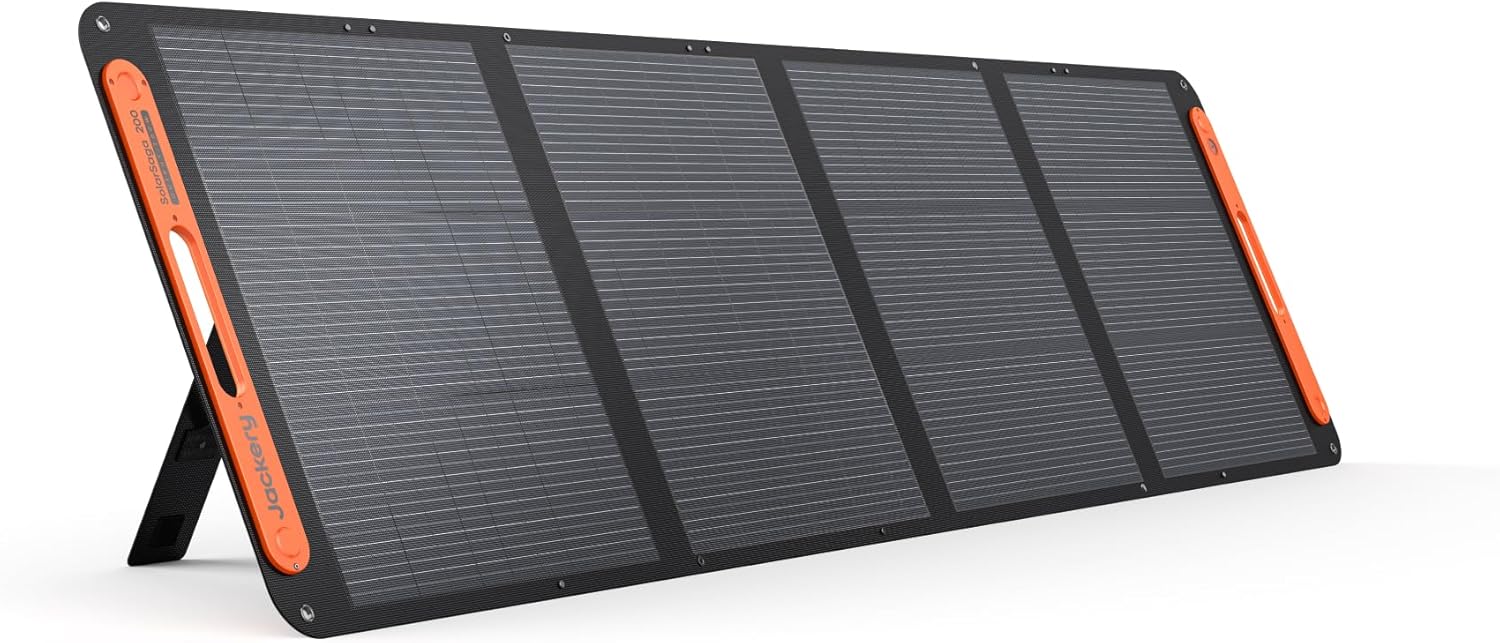
The “Plus” in this model stands for Bifacial generation. The front catches the sun, while the back catches the light reflected from the ground. It’s like getting a “buy one, get a little bit more for free” deal on sunshine.
- 200W of Raw Power: Massive output to charge even the largest Jackery Explorer stations in record time.
- IP68 Waterproofing: You can literally leave it out in a thunderstorm. While the sun won’t shine, the panel won’t die.
- 25% Energy Conversion: Industry-leading efficiency thanks to high-grade monocrystalline cells.
- Fast Setup: It folds down in seconds and has a sturdy magnetic handle that doesn’t feel like it’s going to snap.
Technical Specifications Table
| Feature | Details |
|---|---|
| Model | SolarSaga 200W (Bifacial) |
| Efficiency | Up to 25% |
| Waterproof Rating | IP68 (Dustproof and Waterproof) |
| Folded Dimensions | 21.2 x 24.2 x 1.6 inches |
| Weight | 17.5 lbs (8 kg) |
| Compatibility | Jackery Explorer 2000 Pro / 1000 Pro / 3000 Pro / 2000 Plus |
SolarSaga 200W vs. The Competition
If you’re looking for a portable solar battery setup, you’ve likely seen cheaper options. But as they say: “Buy cheap, buy twice.” Let’s see how Jackery wins.
| Model | Power | Water Rating | Bifacial? |
|---|---|---|---|
| Jackery SolarSaga 200W | 200W | IP68 | Yes |
| EcoFlow 220W Bifacial | 220W | IP68 | Yes |
| Renogy 200W (Standard) | 200W | IP65 | No |
How to Make Your Solar Panel Outlive Your Tent (Maintenance)
You wouldn’t ignore your car’s oil, so don’t ignore your solar gear. Here’s how to keep it at 100%:
- Wipe it Down: Dust, pollen, and bird “surprises” block the sun. Use a microfiber cloth and some water. Since it’s IP68, you can actually wash it!
- Check the Connectors: Make sure no sand or grit is stuck in the DC connectors. A quick blast of compressed air works wonders.
- Fold Carefully: Don’t just slam it shut. Ensure the surface is free of pebbles before folding to avoid micro-cracks in the glass cells.
Optimal Conditions for Max Output
To get that sweet 200W reading, place the panel on a reflective surface like light-colored sand, white gravel, or even a shiny RV roof. This activates the bifacial cells on the back. Angle it exactly 45 degrees toward the sun (use the built-in kickstands—they’re actually good!).
Top 3 Companion Products for the SolarSaga 200W
- Jackery Explorer 2000 Plus: The perfect dance partner. It can handle multiple 200W panels for a full off-grid experience.
- Jackery Solar Extension Cable: Because sometimes the shade is where the RV is, and the sun is “way over there.”
- Protective Carrying Bag: Keep the glass safe from scratches while bouncing around in your trunk.
Ready to Harvest the Sun Like a Pro?
The Jackery SolarSaga 200W is the king of portable panels for a reason.
FAQ: Frequently Asked Questions
Q: Is it okay to leave it in the rain?
A: Yes! It’s IP68 rated, meaning it can handle water and dust. Just make sure the connectors are dry before plugging into your power station.
Q: Does it work with other brands?
A: It uses a standard 8mm DC connector (DC7909). If your station has that port, it’ll work. But it works best with Jackery.
Q: How much extra power does “bifacial” actually give?
A: Depending on the surface, you can get 5% to 25% extra energy compared to a single-sided panel.