
CampingSolar
The 4000W Power Inverter Review: Real Muscle for Your Off-Grid Dreams


Disclosure: As an Amazon Associate, CampingSolar earns from qualifying purchases. If you buy through links on this page, we may earn a small commission at no extra cost to you. Learn more.


Because nobody likes a microwave that sounds like a dying cat.
Let’s set the scene: You’re deep in the woods, the air is crisp, and you suddenly realize you absolutely need a fresh espresso and your hair dryer to look decent for that sunset photo. You look at your 12V RV battery and it looks back at you, helpless. This is where the 4000W Power Inverter (Peak 8000W) steps in like a superhero in a metal box.
If you’ve been searching for portable solar batteries systems, you know that the inverter is the “brain” that turns that DC battery juice into the AC power your “normal” appliances crave. I’ve seen plenty of cheap inverters smoke up after five minutes, but this 4000W beast is built for the long haul. Whether you’re living the van life or building an off-grid cabin, this unit is designed to give you “wall outlet” confidence anywhere.
The Hook: Powering Everything but the Kitchen Sink (Wait, maybe that too!)
Why This 4000W Inverter Is a Heavy Hitter
This isn’t just a basic converter; it’s a high-capacity power hub. Here’s why it’s currently a top pick for 2026:
- Insane Peak Power: While it hums along at 4000W, it can handle an 8000W surge. That’s vital for appliances with motors (like fridges or pumps) that need a “kick” to start.
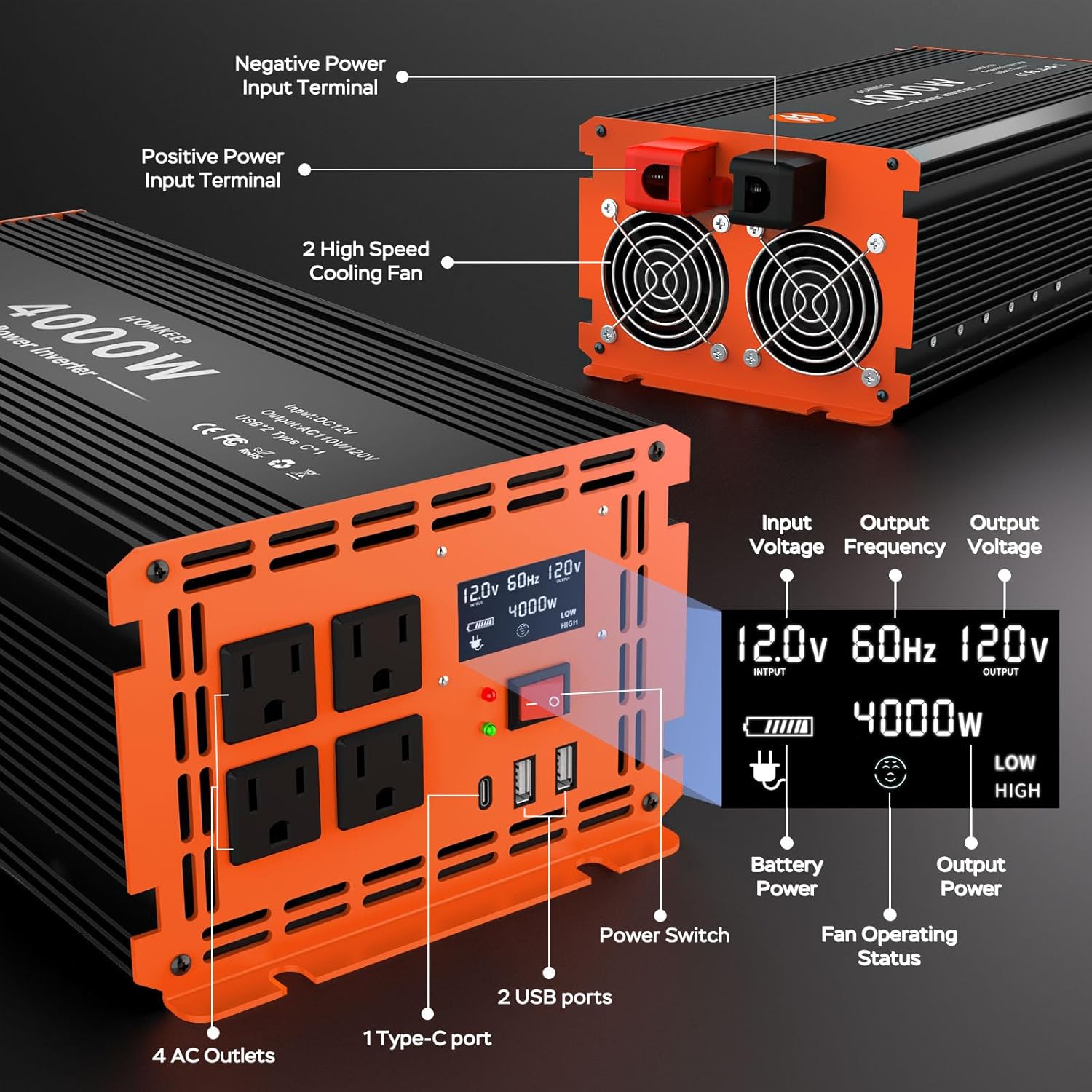
- Smart LCD Display: No more guessing. It shows you input voltage and output wattage in real-time. It’s like having a digital pulse monitor for your RV’s electrical system.
- Remote Control Included: You can tuck the inverter away in a ventilated compartment and control it from your dashboard or bed. Laziness? No, it’s efficiency.
- Built-In Protections: Overload, overheat, and short-circuit protection. It’s designed to shut itself down before it (or your batteries) gets hurt.
Technical Specifications: The Data
| Feature | Details |
|---|---|
| Continuous Power | 4000 Watts |
| Peak Surge Power | 8000 Watts |
| Input Voltage | 12V DC |
| Output Voltage | 110V/120V AC |
| Outlets | 2 AC Outlets + USB Port |
Battle of the Inverters: 4000W Class
How does this unit compare to the fancy brands you’d find at Go Outdoor? Let’s break it down.
| Model | AFERIY/Generic 4000W | Renogy 3000W | Victron Phoenix 12/3000 |
|---|---|---|---|
| Wattage | 4000W | 3000W | 2400W (Continuous) |
| Price | $$ (Affordable) | $$$ | $$$$$ |
| LCD Included | Yes | Optional | Bluetooth App |
Maximum Performance: The “Cool” Factor
To get that full 4000W without the fans sounding like a jet engine, follow these operating tips:
- Thick Cables Matter: The included cables are decent, but if you’re pulling 4000W regularly, consider upgrading to 0AWG copper. Thin wires get hot and lose power!
- Ventilation: Inverters create heat. Don’t bury it under your camping gear. It needs airflow to keep the electronics happy.
- Battery Bank Size: Don’t try to pull 4000W from a single small car battery. For this unit, a 200Ah to 400Ah LiFePO4 bank is the “Goldilocks” zone.
Maintenance: How to Make it Last a Decade
- Tighten Connections: RVs vibrate. Check your terminal bolts every few months. A loose connection causes arcing and heat.
- Dust it Off: Use a can of compressed air to blow dust out of the cooling fans twice a year.
- Voltage Monitoring: Keep an eye on the LCD. If your input voltage drops below 11V too often, you’re stressing the internal capacitors.
Top 3 Accessories for This 4000W Setup
- 250A Inline Circuit Breaker: Safety first! Protect your rig from massive surges.
- LiFePO4 12V 200Ah Battery: The perfect fuel for this inverter. Check out solar battery guides for the best deals.
- Pure Copper Battery Cables: Heavy duty 0-gauge cables to ensure zero power drop.
Frequently Asked Questions (FAQ)
Q: Will it run my RV Air Conditioner?
A: Yes, most 13,500 BTU units pull about 1500-2000W. This 4000W unit handles that with plenty of room for your TV and lights.
Q: Is it “Pure Sine Wave”?
A: This specific model is a high-output modified or semi-sine wave unit (check latest Amazon listing for Pure Sine upgrades). It’s perfect for tools, heaters, and most appliances, but be careful with high-end medical gear.
Q: Can I use it in my truck?
A: Absolutely! Just make sure your alternator can keep up with the demand.