CampingSolar
Goal Zero Nomad 20 Review: Stop Chasing Outlets and Start Chasing the Sun





Introduction: The “Infinite Battery” Dream
We’ve all been there: You’re deep in the backcountry, the GPS says you have three miles to go, and your phone screen flickers with that dreaded 2% warning. You look at your power bank—it’s empty. You look at the sun—it’s mocking you. If only you could plug your phone directly into that giant ball of fire, right?
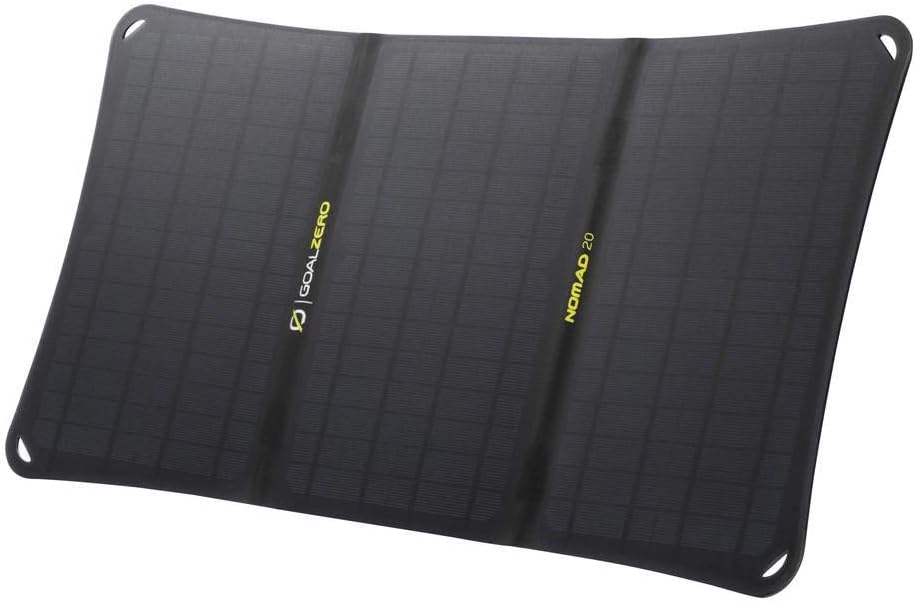
Well, the Goal Zero Nomad 20 is basically the middleman for that transaction. It’s a foldable, 20-watt monocrystalline solar panel that’s small enough to strap to your backpack but powerful enough to keep your gear alive when civilization is just a distant memory. At CampingSolar.us, we’ve dragged this panel through dusty trails and hung it off camper van windows. Does it live up to the Goal Zero hype, or is it just a fancy sun-catcher? Let’s find out if this is the essential piece of outdoor gear you’ve been missing.
Key Features: Why the Nomad 20 Isn’t Your Average Solar Toy
- The “Brainy” USB Port: Unlike cheap panels that stop charging the moment a cloud passes, the Nomad 20 features an intelligent auto-restart. If the sun dips, it keeps trying until it finds the light again.
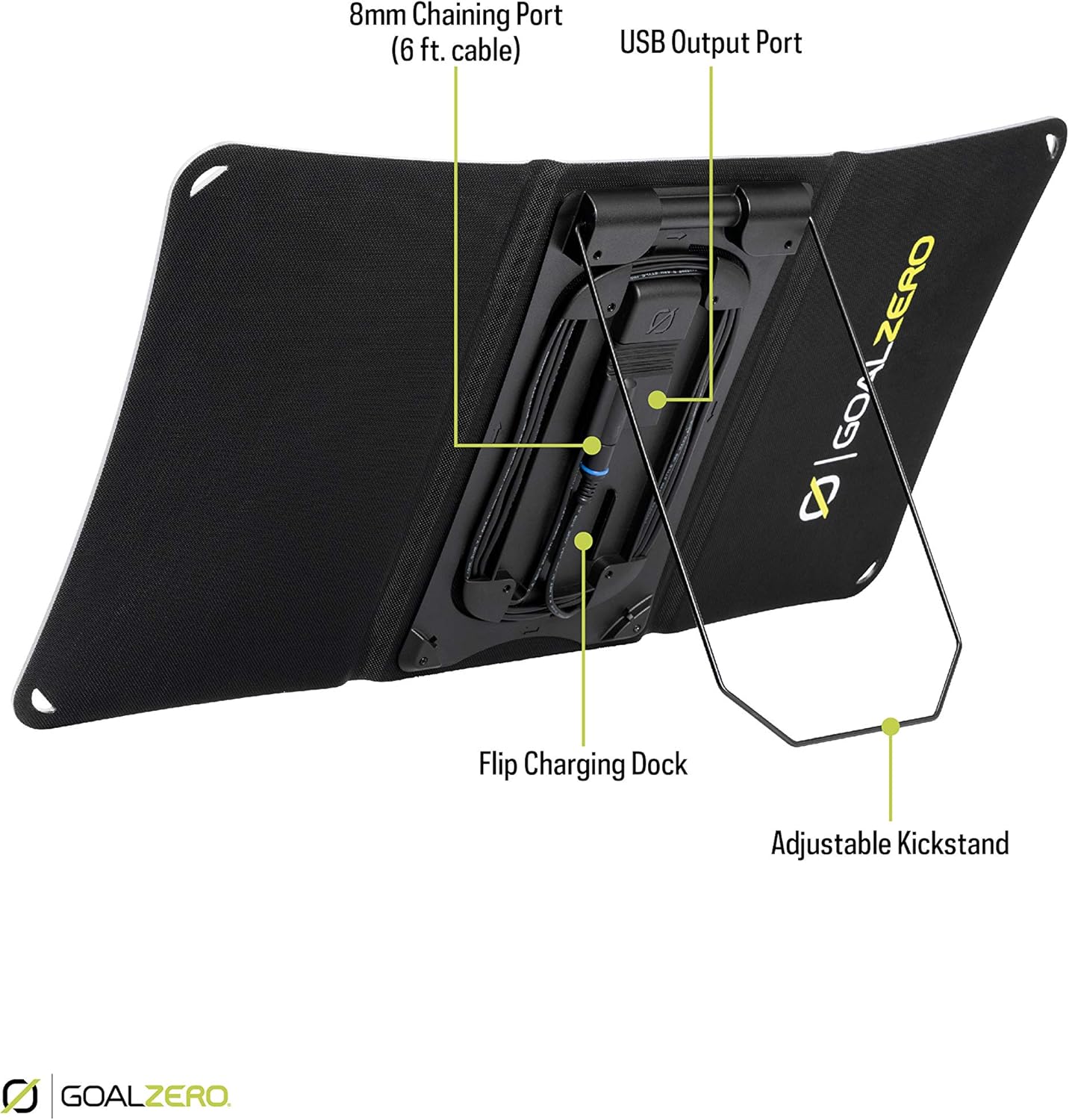
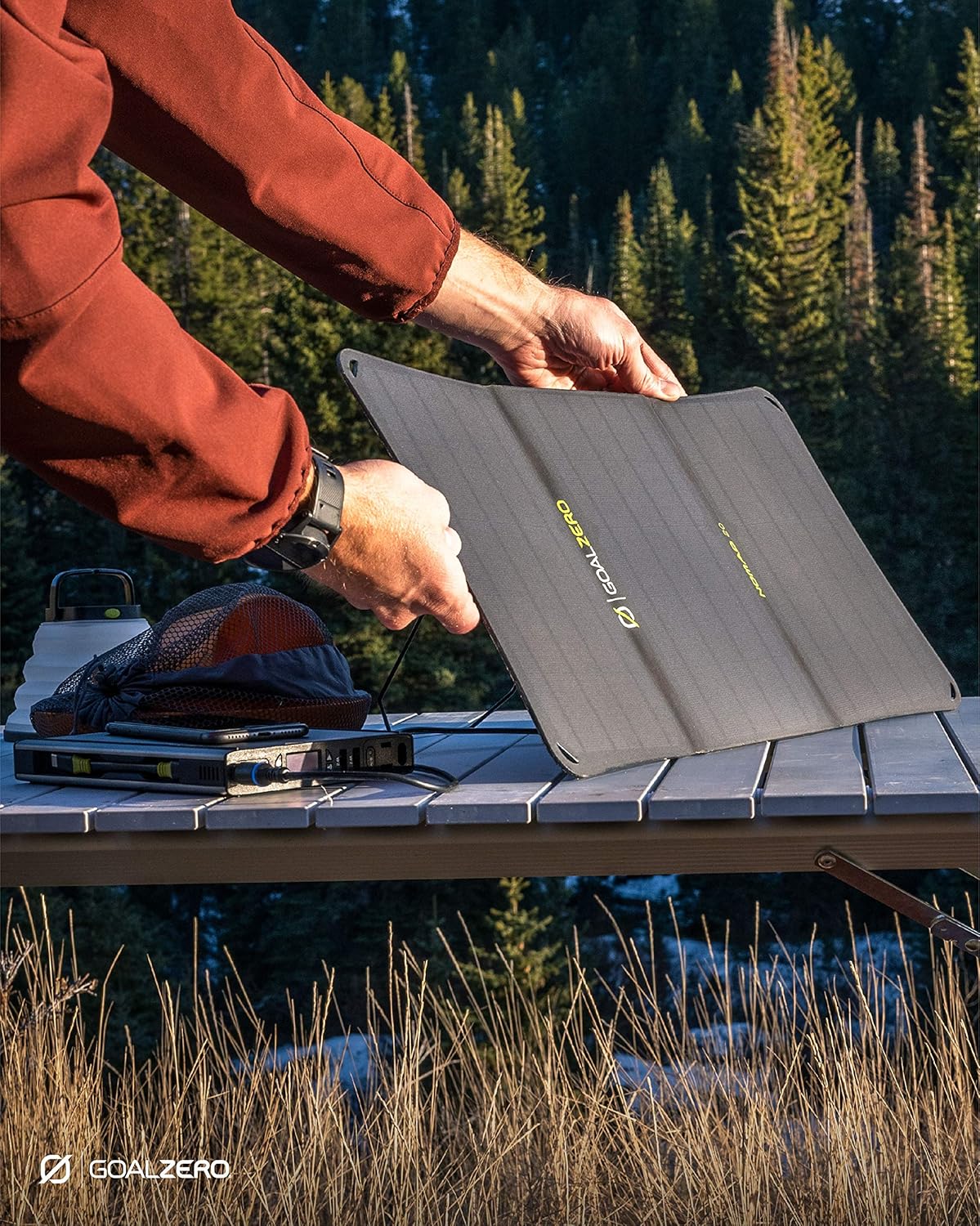
- 8mm Port Convenience: This is the secret sauce. It plugs directly into Goal Zero Yeti power stations (like the Yeti 300 or 700), turning it into a full-scale solar generator.
- Built-in Kickstand: You don’t need to lean it against a rock and hope it doesn’t slide. The adjustable kickstand clicks into place at multiple angles to catch every last ray.
- Monocrystalline Efficiency: This isn’t the old-school “thin film” stuff. These are high-quality cells that produce more power per square inch, even in less-than-perfect light.
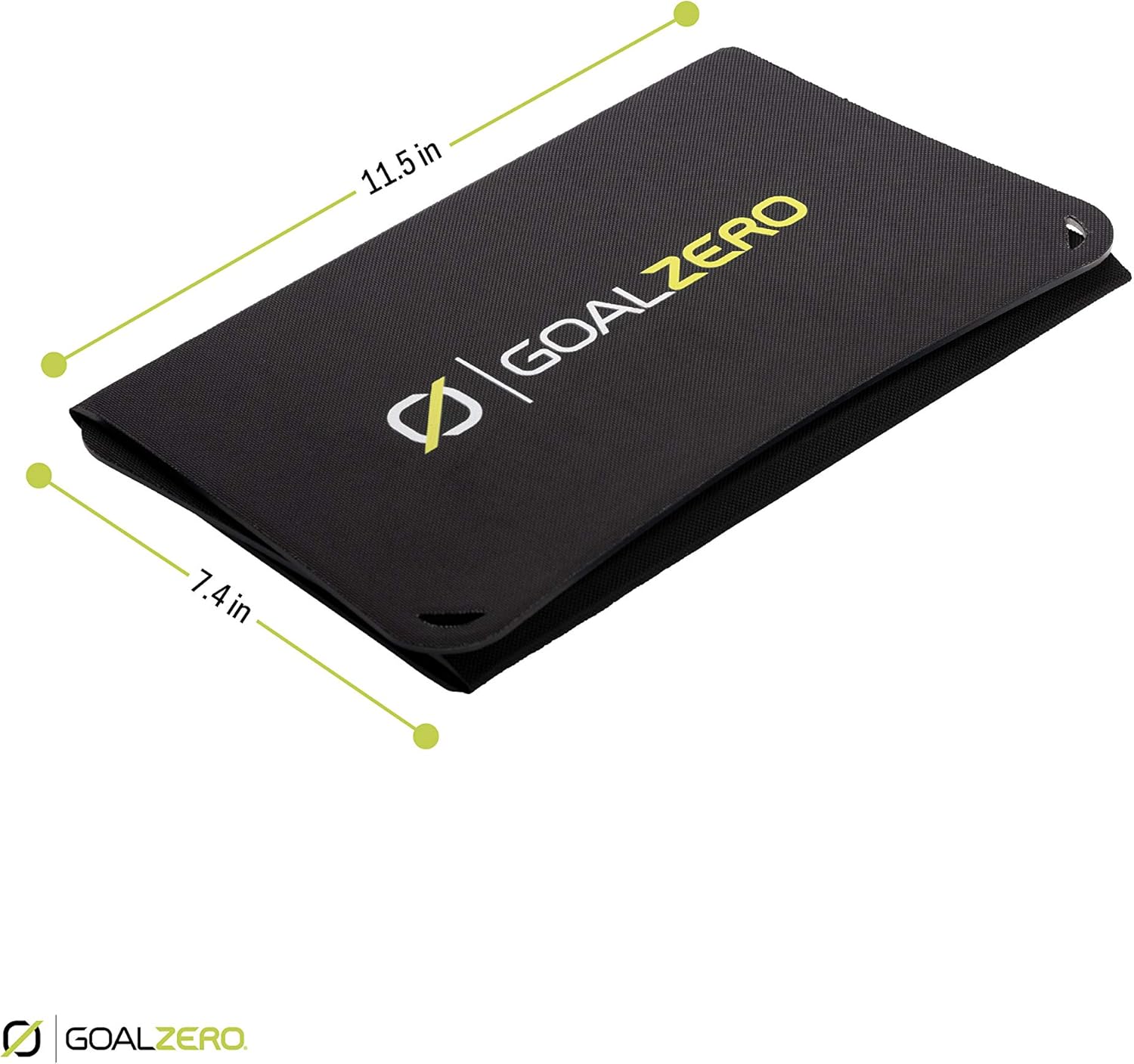
- Rugged & Foldable: It’s built with a tough fabric casing that handles trail abuse. When you’re done, it folds down into a neat, slim profile that slides into any pack.
Technical Specifications: The Power Stats
| Feature | Goal Zero Nomad 20 Details |
|---|---|
| Rated Power | 20 Watts |
| Cell Type | Monocrystalline |
| USB Output | 5V, up to 2.1A (10.5W max) |
| 8mm Output | 14-22V, up to 1.3A (20W max) |
| Weight | 2.28 lbs (1.03 kg) |
| Dimensions (Unfolded) | 11.5 x 21.75 x 0.75 in |
The Showdown: Nomad 20 vs. The Compact Rivals
How does the Nomad 20 stack up against the competition found on GoOutdoor.us? Let’s look at the “Day-Tripper” category.
| Feature | Nomad 20 | Anker 21W Dual Port | BigBlue 28W |
|---|---|---|---|
| Integrated Kickstand | ✅ Yes (Multi-angle) | ❌ No | ❌ No |
| DC 8mm Port | ✅ Yes (for Power Stations) | ❌ No | ❌ No |
| Auto-Restart | ✅ Excellent | ⚠️ Good | ⚠️ Average |
| Durability | ⭐⭐⭐⭐⭐ | ⭐⭐⭐⭐ | ⭐⭐⭐ |
Mastering the Sun: Optimal Operating Conditions
To get the full 20 watts, you need to be smart. Angle is everything. If the panel is lying flat on the ground while the sun is at a 45-degree angle, you’re losing about 40% of your potential energy. Use that kickstand! Also, remember that glass is a thief—placing the panel behind a car window can cut efficiency by up to 50%. For the best results, get it outside, in the breeze, directly facing the “big yellow guy” in the sky.
Maintenance: Keeping Your Panel “Shining”
If you treat your Nomad 20 like a piece of floor mat, it will eventually stop liking you back. Follow these tips:
- The Microfiber Secret: Dust, pollen, and salt spray create a film that blocks light. Wipe the cells down with a damp microfiber cloth after every major trip.
- Port Check: The USB and 8mm ports are in a protective pocket, but sand still finds a way. Use a can of compressed air to keep them clear.
- Cable Care: Never leave your cables coiled tightly inside the storage pocket while the panel is in the sun. The heat can degrade the rubber housing over time.
- Avoid “The Fold” Stress: While it’s designed to fold, don’t store heavy gear (like a cast-iron skillet) on top of it in your trunk. Pressure can cause micro-cracks in monocrystalline cells.
Top 3 Perfect Partners for the Nomad 20
- Goal Zero Venture 35: This rugged power bank is the perfect middleman. Charge it during the day, and use it to power your phone at night.
- Goal Zero Yeti 200X: If you need AC power for a laptop, the Nomad 20 is the ideal “slow-charger” to keep this mini-station topped off.
- Guide 12 Recharger: Want to charge AA or AAA batteries for your headlamp? This plugs directly into the Nomad’s USB port.
Don’t Let the Sun Go to Waste!
What Real Hikers Think
“I strapped this to my backpack during a 5-day hike in the Grand Canyon. It kept my phone and Garmin inreach charged the whole time. The kickstand is a game-changer!” – Arizona Al
“Better build quality than any of the cheap brands I’ve tried. It feels like a real piece of gear, not a gimmick.” – Solar Sarah
Frequently Asked Questions (FAQ)
Q: Does it store power?
A: No. It’s a panel, not a battery. It only generates power while in the sun. Pair it with a Venture or Sherpa power bank to store energy for later.
Q: Is it waterproof?
A: It is highly weather-resistant and can handle a drizzle, but you shouldn’t submerge it. If it gets soaked, let it dry completely before folding it up.
Q: Can it charge a laptop?
A: Directly? No. But it can charge a Sherpa 100AC or Yeti station, which can power your laptop.