

CampingSolar
ZOUPW 480W Bifacial Portable Solar Panel Review: The Two-Sided Powerhouse Built for Serious Off-Grid Setups



By a camper who used to babysit a single-sided panel all afternoon just to chase 300 real watts — and now doesn’t have to.
The Hook: What If Your Solar Panel Could Catch Sunlight You’re Currently Wasting?
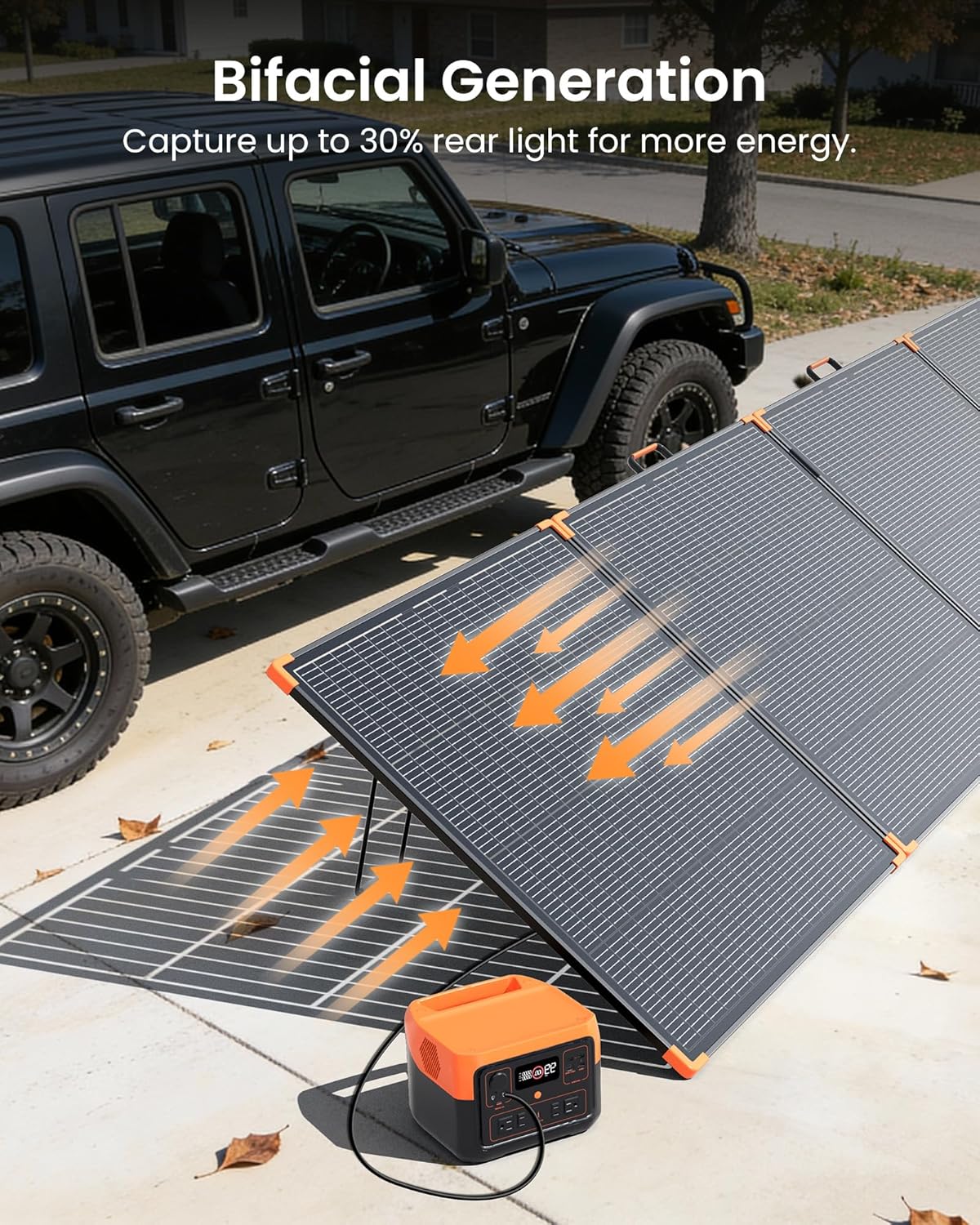
Here’s something nobody tells you when you buy your first portable solar panel: half the light hitting the ground around it is just… gone. Bounced off sand, snow, gravel, or a light-colored tarp and wasted, because a standard single-sided panel can only absorb what hits its front face. It’s like installing a skylight and painting the back of it black.
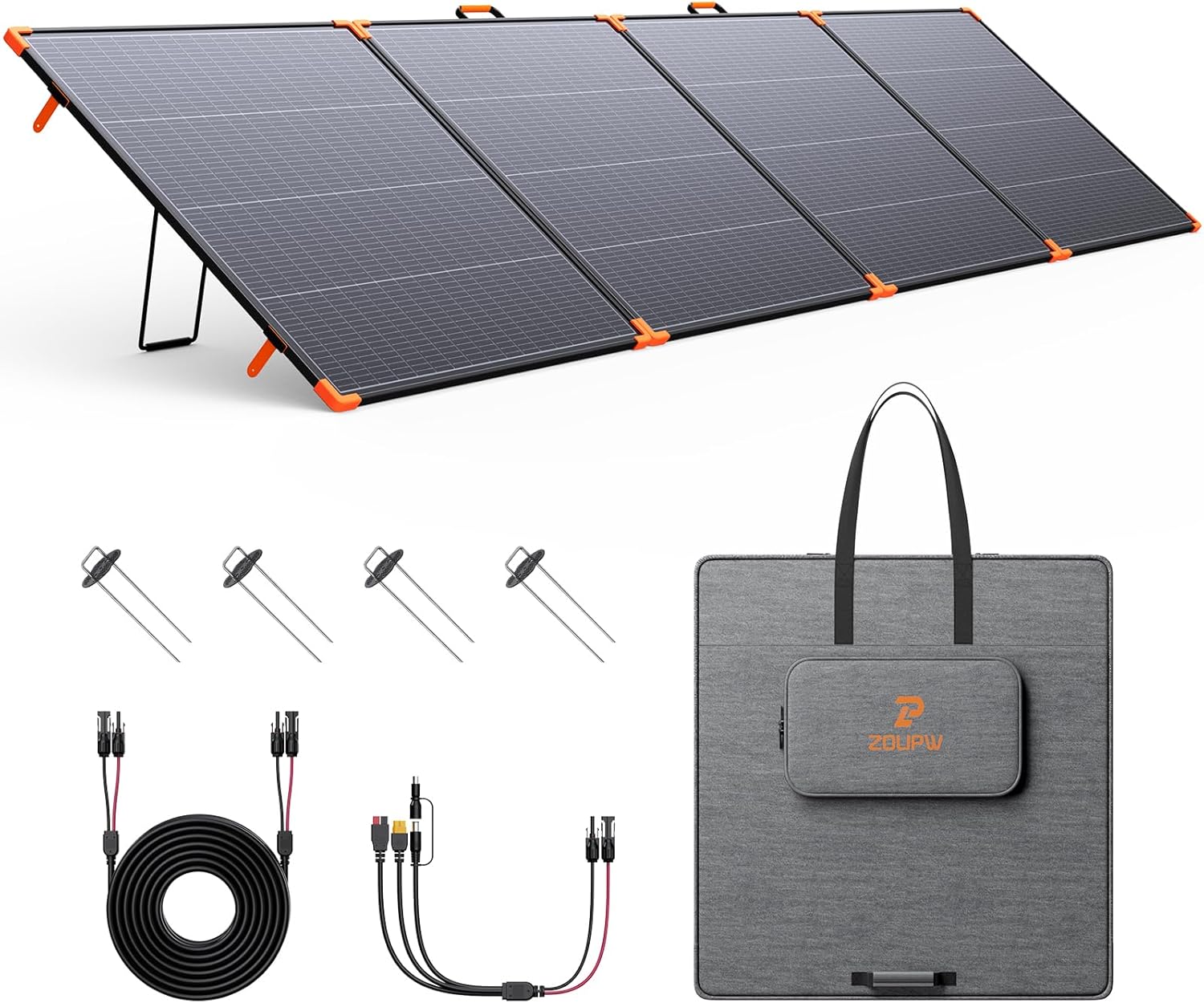
The ZOUPW 480W Bifacial Portable Solar Panel is built specifically to stop wasting that reflected light. It uses N-type 16BB monocrystalline cells on both sides of the panel, so on a bright sandy beach, a snowy trailhead, or even a light-colored driveway, the rear face is quietly harvesting bounced sunlight the whole time — up to 30% extra output on high-reflectivity surfaces, according to the manufacturer. Add IP68 waterproofing, bypass diodes for shade tolerance, and a rugged composite surface instead of the usual ETFE laminate, and you’ve got a panel clearly aimed at people running serious off-grid setups, not casual weekend warriors.
We dug into the specs, cross-referenced verified buyer feedback, and compared it against similar panels already living on this site to see whether the ZOUPW 480W earns its spot on your gear list. Here’s the full breakdown before you check current availability and pricing on Amazon.
Key Features & Benefits
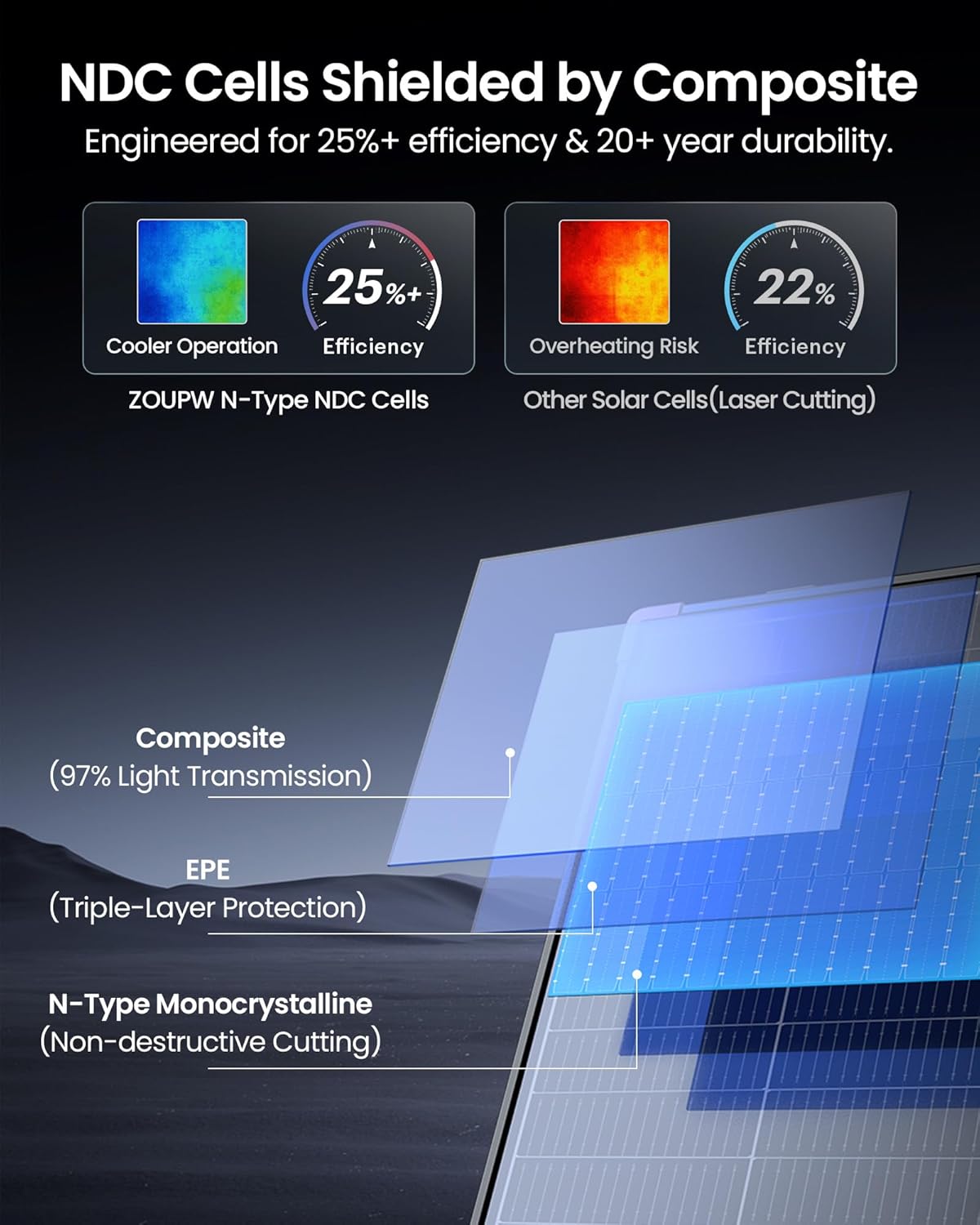
- True bifacial N-type cells: 16BB (16-busbar) monocrystalline cells rated at 25% efficiency on the front face, with a rear face capturing reflected light for a claimed output boost of up to 30% on snow, sand, or other reflective ground.
- High-voltage output built for big power stations: With a Vmp of 42.5V and Voc of 49.3V, this panel is engineered for high-capacity stations like EcoFlow Delta, Bluetti Elite, and Anker SOLIX C1000 that accept higher input voltages.
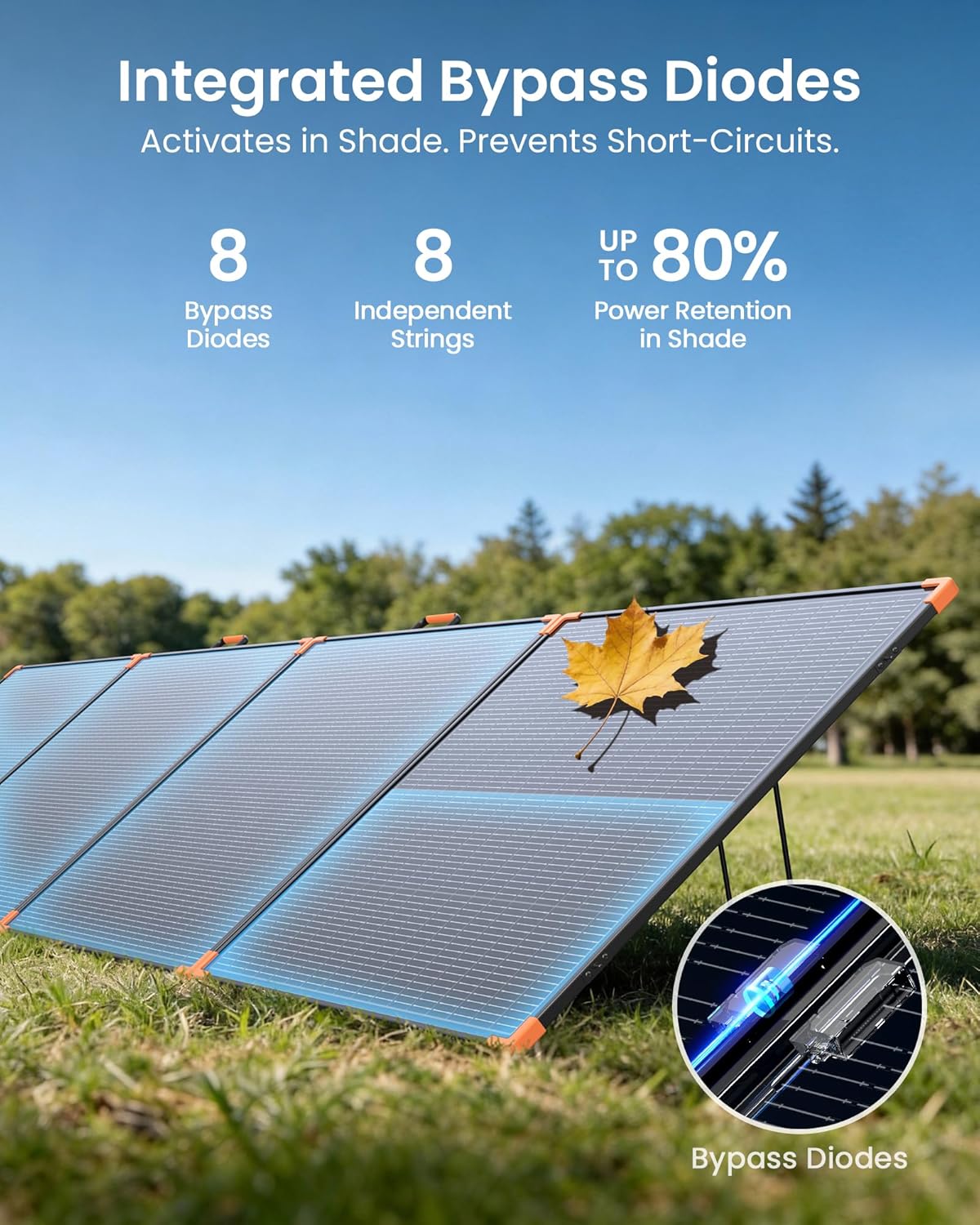
- Integrated bypass diodes: If part of the panel falls into shade — a common annoyance at wooded campsites — bypass diodes keep the rest of the array producing power instead of dragging the whole panel’s output down.
- IP68 waterproof rating: This is a step above the IP65/IP67 ratings common on competing panels, meaning stronger resistance to dust and sustained water exposure, not just light rain.
- Composite surface instead of standard ETFE: ZOUPW markets this as more scratch-resistant and better at heat management than typical laminated panels, which matters if you’re setting up on rocky ground trip after trip.
- Universal 4-in-1 adapter cable: Ships with connectors covering XT60 (EcoFlow/Bluetti/Anker), DC7909/DC8020 (Jackery), and Anderson connectors, so you’re not stuck ordering a separate adapter for most major power station brands.
If bifacial technology and higher-voltage compatibility are new territory for you, it’s worth comparing this against the more traditional single-sided options we’ve already covered in our foldable solar panel reviews here on Camping Solar.
Specifications Table
| Specification | ZOUPW 480W Details |
|---|---|
| Model | ZP-DS480W |
| Maximum Power (Pmax) | 480W |
| Max Power Voltage (Vmp) | 42.5V |
| Max Power Current (Imp) | 11.3A |
| Open-Circuit Voltage (Voc) | 49.3V |
| Short-Circuit Current (Isc) | 12.0A |
| Cell Type | N-type 16BB monocrystalline, bifacial |
| Cell Efficiency | Up to 25% |
| Waterproof Rating | IP68 |
| Operating Temperature | -20°C to 60°C (-4°F to 140°F) |
| Surface Material | Composite material (non-ETFE) |
| Frame | Anodized aluminum alloy |
| Unfolded Dimensions | ~138.6 x 32.6 x 0.9 in |
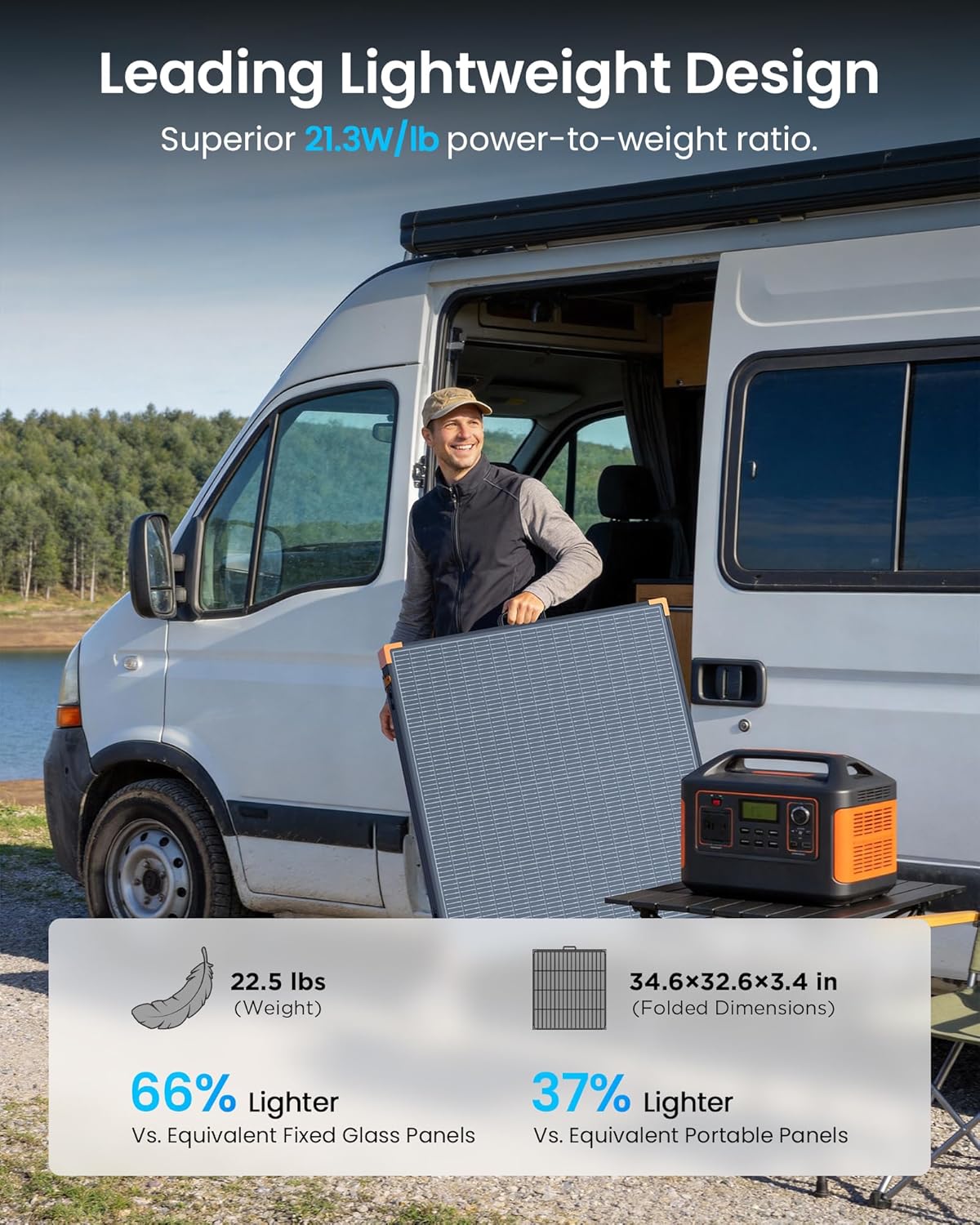
| Folded Dimensions | ~34.6 x 32.6 x 3.4 in |
| Weight | ~22.5 lbs (10.2 kg) |
| Watts-per-Pound | ~21.3 W/lb |
| Included Cable | 4-in-1 adapter (XT60, DC7909, DC8020, Anderson) |
| Compatible Power Stations | EcoFlow Delta series, Bluetti Elite, Anker SOLIX C1000, Jackery (voltage-dependent) |
Important compatibility note: Because of its 42.5V/49.3V output range, this panel is built for high-capacity, high-voltage power stations. If you’re running an older or smaller low-voltage unit (many entry-level Jackery or Bluetti models under roughly 30V input), double-check your power station’s accepted input range before buying — some smaller units are not compatible with this voltage class.
Comparative Table: ZOUPW 480W vs. Similar Portable Solar Panels
| Model | Power | Weight | Cell Type | Best For |
|---|---|---|---|---|
| ZOUPW 480W Bifacial | 480W | ~22.5 lbs | N-type 16BB, bifacial, 25% efficiency | Serious off-gridders with high-voltage power stations |
| Anker SOLIX PS400 | 400W | Heavier rigid-leaning build | Monocrystalline (single-sided) | Anker ecosystem users wanting app integration |
| Jackery SolarSaga 200W Bifacial | 200W (bifacial boost) | Lighter, smaller footprint | Bifacial monocrystalline | Solo campers who don’t need 480W of capacity |
The clear differentiator here is voltage class and raw output: the ZOUPW 480W is aimed squarely at people running large power stations that can actually use a 42V+ input, while the Anker and Jackery options serve lower-voltage, more general-purpose setups. If you already own a high-capacity EcoFlow, Bluetti, or Anker C1000-class station, the ZOUPW is arguably the more efficient match for your system.
How It Compares to Gear on GoOutdoor.us
If you’re still assembling the battery side of your off-grid kit, our sister site’s camping power station guides on GoOutdoor.us are worth a browse before you commit to a solar panel this size — matching voltage and capacity correctly up front saves a lot of headaches later.
What Actual Customers Are Saying
- Real-world output regularly meets or exceeds the rated 480W in strong, direct sun according to multiple buyer reports, with one Florida-based reviewer reporting the panel pushing past 500W in hot midday sun.
- The bifacial gain is noticeable on reflective surfaces — buyers charging over light-colored ground or near water report a visible bump in input readings on their power station displays.
- Setup is consistently praised as simple, with one owner noting their EcoFlow Delta Pro 3 jumped straight to 522W on first connection, climbing to 535W after minor angle adjustment.
- Weight is a fair trade-off — several reviewers directly compare it favorably to older 400W rigid suitcase panels, noting it’s lighter despite the higher wattage.
- A few buyers mention checking stock availability carefully, as strong demand has occasionally led to limited inventory windows on this specific model.
Tips for Getting the Most Out of Your ZOUPW 480W
- Confirm your power station’s voltage window first. This is the single most important step — verify your station accepts a 42–49V input range before you unbox it.
- Deploy over reflective ground when you can. Light sand, snow, or a white groundsheet under the panel meaningfully boosts the bifacial gain — dark grass or dirt underneath won’t show the same benefit.
- Use the included 4-in-1 cable correctly. Match the connector to your specific power station brand rather than forcing a generic adapter, to avoid voltage mismatches.
- Let the bypass diodes do their job. Don’t stress about a stray branch shadow crossing part of the panel — that’s exactly the scenario the bypass diodes are designed to compensate for.
- Angle for the sun, not just “flat and forget.” Even with bifacial gain working in the background, direct front-face sun exposure is still your biggest lever for hitting peak output.
How to Maintain It So It Lasts for Years
- Rinse both sides after dusty or sandy trips. Since the rear face is also generating power, keeping it clean matters here more than on a standard single-sided panel.
- Store dry, always. Even with an IP68 rating, folding the panel away while wet invites moisture buildup in the folds over repeated trips.
- Inspect the 4-in-1 cable connectors regularly. With multiple connector types in play, check for wear at whichever connector you use most often.
- Avoid unnecessary flexing at the fold lines. The composite surface is tougher than typical ETFE, but repeated hard folding in cold weather can still stress the material over time — let it warm up a bit before folding on a cold morning if possible.
- Keep the frame’s anodized aluminum edges free of corrosion by rinsing off salt spray promptly if you’re using it near the coast or on a boat.
Top 3 Products That Pair Perfectly With the ZOUPW 480W
| Product | Why It Pairs Well |
|---|---|
| A high-capacity power station (EcoFlow Delta series, Bluetti Elite, or Anker SOLIX C1000-class) | These are exactly the voltage class this panel is engineered for, letting you actually use its full 42V+ output instead of derating it. |
| A reflective ground tarp or light-colored groundsheet | Directly amplifies the bifacial gain this panel is built around — a simple, cheap way to squeeze out extra real-world watts. |
| A voltage-compatible solar generator parallel adapter | For users running two panels together (as some buyers report doing), a proper parallel connector keeps combined input clean and safe. |
Best Conditions for Maximum Performance
- Strong, direct midday sun — this panel is designed for serious output, and it shows most clearly under peak sun hours.
- Reflective ground surfaces like sand, light gravel, or snow, to actually realize the bifacial gain the panel is built around.
- Perpendicular panel angle to the sun for the front face, adjusted periodically through the day.
- Moderate ambient temperatures — even N-type cells see some efficiency drop in extreme heat, so morning and late-afternoon sun on very hot days can sometimes outperform scorching midday output.
- A verified-compatible, high-voltage power station — this is the condition that matters most for this specific panel, since it won’t perform to spec on a mismatched low-voltage unit.
Why Buy From Amazon?
Ordering through Amazon gives you fast, trackable shipping, an established return window if anything arrives damaged, and a large pool of verified buyer reviews to weigh against everything covered in this review — especially useful for a higher-investment purchase like a 480W panel.
👉 Check Current Price on Amazon
Frequently Asked Questions
Is the ZOUPW 480W compatible with Jackery power stations?
It depends on the specific Jackery model’s input voltage range. The included 4-in-1 cable does include a Jackery-style connector, but because this panel outputs in the 42–49V range, it’s built for higher-capacity Jackery units rather than smaller, low-voltage entry-level models. Always check your unit’s accepted input voltage before purchasing.
What does “bifacial” actually mean for real-world charging?
A bifacial panel has active solar cells on both the front and rear faces. The front captures direct sunlight as normal, while the rear captures light reflected off the ground beneath it — snow, sand, and light-colored surfaces reflect the most light, potentially adding up to 30% extra output according to the manufacturer.
How waterproof is IP68 compared to the more common IP65 rating?
IP68 is a meaningfully higher protection standard than IP65 — it indicates strong resistance to both dust ingress and sustained water exposure (not just light rain or splashing), making it a better fit for boat, marine, or consistently wet-climate use.
Can I run two of these panels together for more power?
Some buyers report running panels in parallel to combine output for larger power stations, but this requires a compatible parallel adapter and a power station rated to accept the combined voltage and current — check your station’s specifications before attempting this.
Does shade on part of the panel ruin the whole panel’s output?
No — the built-in bypass diodes are specifically there to prevent a shaded section from dragging down the output of the rest of the panel, which is a common weak point on cheaper panels without this feature.
How does the composite surface compare to standard ETFE lamination?
ZOUPW markets the composite surface as more scratch-resistant and better at managing heat than typical ETFE-laminated panels, which can translate to a longer working lifespan for panels that get set up and packed away frequently on rough ground.
Final Verdict: Should You Buy the ZOUPW 480W?
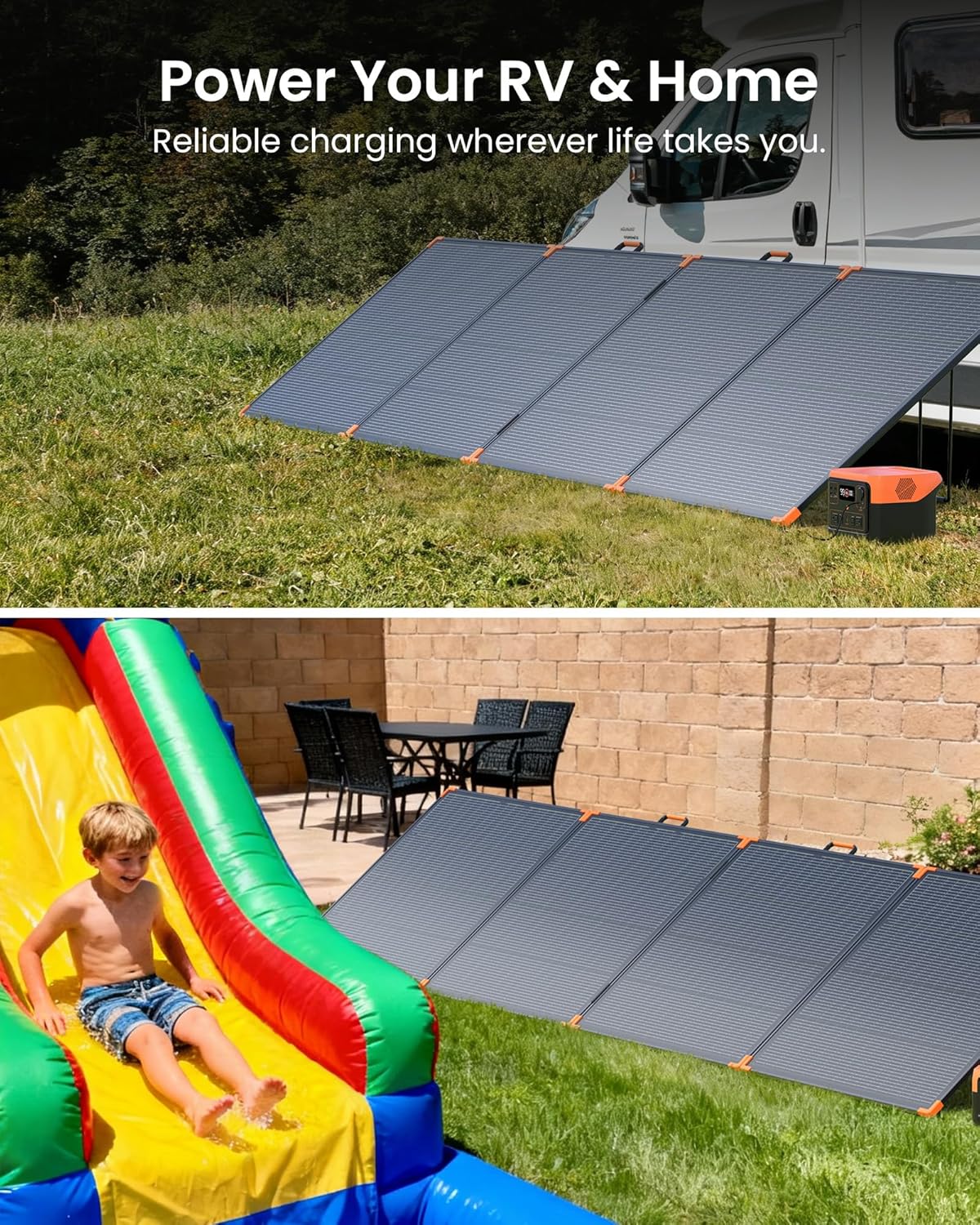
The ZOUPW 480W Bifacial Portable Solar Panel is not really aimed at the casual weekend camper topping off a small power bank — it’s built for people running a genuine off-grid power system: a high-capacity EcoFlow, Bluetti, or Anker C1000-class station that can actually use its 42V+ output and benefit from every extra watt the bifacial rear face can scavenge. For that audience, it’s a genuinely smart piece of engineering, with IP68 durability and bypass diodes adding real-world reliability on top of the raw wattage.
The one thing to get right before buying is voltage compatibility — this isn’t a universal “works with everything” panel, and skipping that check is the most common way to end up disappointed. Confirm your power station’s input range, and this panel delivers serious, dependable output for serious off-grid use.
👉 Get the ZOUPW 480W on Amazon
Disclosure: This post contains affiliate links. We may earn a commission on qualifying purchases at no extra cost to you.